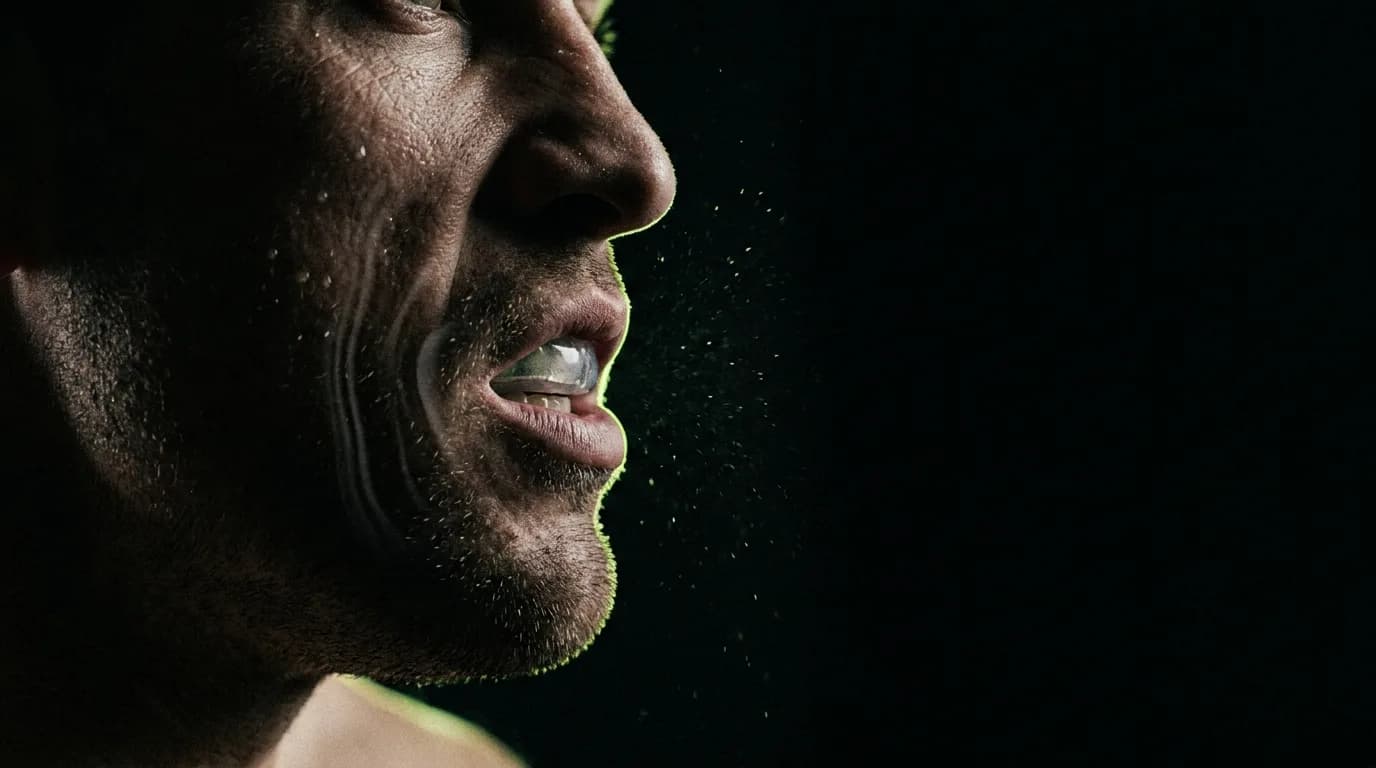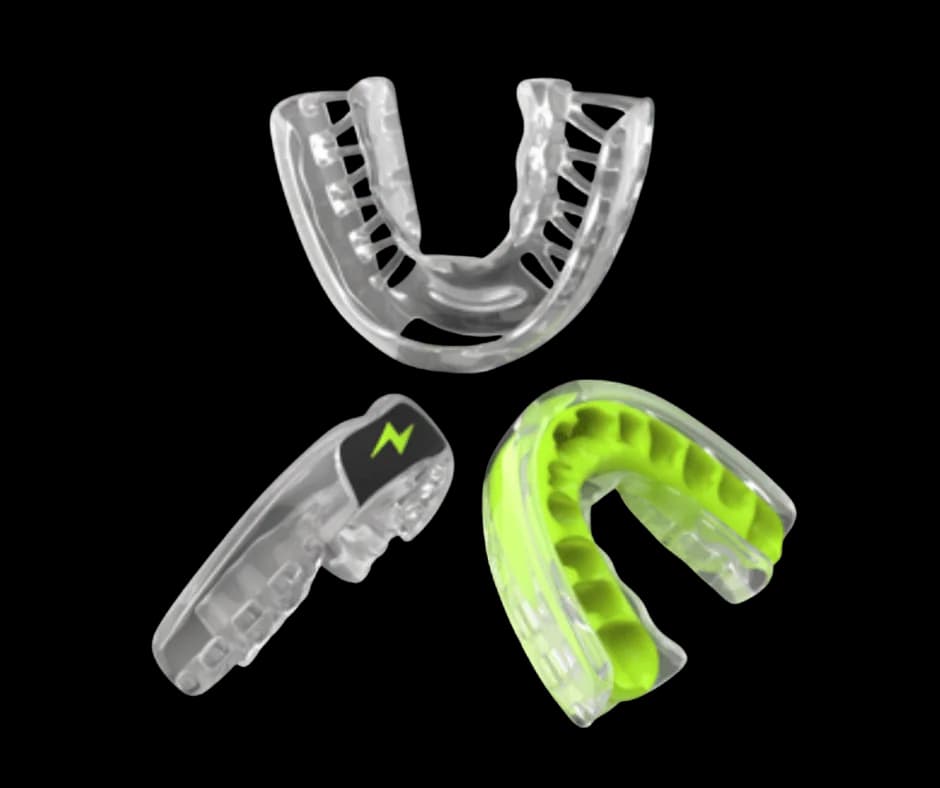
Boil-and-bite guards are inexpensive — generic market prices run roughly $15–$40 — and use generic heat-molding against your teeth. Custom-fit guards are molded from your own dental impression: GumGear sells them direct at $99 (Contact) or $169 (Combat), and a dentist can make one too at a higher price. The protection gap between a generic shell and a custom guard is bigger than most athletes realize — especially in combat sports.
The short answer
For occasional recreational play, a quality boil-and-bite is fine. For anything with repeated direct impact — combat sports, rugby, hockey, lacrosse — a custom fit stays in place during contact, distributes force more evenly across your teeth and jaw, and lets you breathe and speak more clearly during hard rounds. Custom guards also tend to last longer per dollar. A mouthguard of either type reduces the risk of dental injury rather than removing it, which is why how well it stays put matters so much.
How each one actually fits
A boil-and-bite is a generic plastic shell that you soften in hot water, then press against your teeth with fingers, tongue, and bite pressure. It captures a rough outline of your bite — often with gaps around the back molars, uneven thickness, or material that ends up too thick on one side and too thin on the other. Most athletes find the guard loosens within a few weeks as the EVA relaxes back toward its original shape.
A custom-fit guard works the opposite way. A dental-impression tray captures the exact contour of each tooth, the gum line, and the relative position of your upper and lower teeth. GumGear uses that impression to cast your arch and pressure-laminate multi-layer EVA over it, which gives consistent thickness, full-tooth coverage, and a fit that is built in rather than pressed by hand. Same general methodology as a dentist-made guard, at a direct-to-consumer price. For the step-by-step on the impression itself, see how to take a dental impression at home.
Protection: what the fit difference means
A mouthguard only protects you while it stays in place. When a guard shifts during a punch or a tackle, it stops distributing impact force across your teeth and jaw. The load then concentrates on whatever teeth are still in contact — which is how chipped incisors and cracked molars happen despite the athlete "wearing a mouthguard."
Custom-fit guards also tend to be multi-layer constructions. GumGear uses BPA-free, latex-free, medical-grade EVA, pressure-laminated into multiple layers. Boil-and-bite shells are usually a single layer. For strike-heavy sports the difference is material — see our breakdown of materials and tier choices in the combat sports mouthguard guide.
How a boil-and-bite fails over time
A boil-and-bite does not usually fail dramatically. It fails quietly, which is the more dangerous way, because it keeps feeling like a mouthguard long after it has stopped acting like one. These are the patterns to watch for.
- It relaxes back toward its original shape. The material was molded warm and holds its new shape only approximately. Repeated mouth heat, bite pressure, and cleaning cycles nudge it back, and the grip on your teeth loosens.
- You start clenching to hold it. The first sign is usually behavioural: you notice you are biting down to keep it seated. That is the guard telling you its retention is gone, and it is also a common route to jaw soreness. The mechanics are covered in mouthguard jaw pain: causes and fixes.
- Thin spots wear through. Where the original press left the material thin, chewing and clenching wear it down first, and those thin zones sit exactly where you were counting on cushioning.
- Hot water and heat shorten its life further. Dishwashers, hot cars, and boiling a shell a second time all degrade EVA.
Custom guards wear too, and they are not permanent. The difference is the starting point: a custom guard begins with full-contact retention, so it has more fit to lose before it stops doing its job.
Breathing, talking and comfort
Protection is not the only difference you will notice in use. A generic shell is a compromise sized to a category of mouths, and that shows up in small ways.
Breathing. A bulky or ill-fitting guard can interfere with airflow, particularly when you are working hard and breathing through your mouth. A guard that sits close to the teeth and does not extend onto soft tissue leaves more room to breathe.
Talking. Coaches, corner staff, and referees need athletes to be understood. Guards that sit loose or sit thick in front make speech muffled; a closer fit makes it easier.
Gagging. Many people find a boil-and-bite gags them if it extends too far back, and trimming it short to fix that can remove molar coverage. The trade-off between those two problems is described in how to fit a mouthguard, and it is one a cast-based guard avoids because the back edge is designed from the geometry of your mouth.
Side by side
| Feature | Boil-and-bite | GumGear custom |
|---|---|---|
| Price | Roughly $15–$40 (generic market range) | $99 Contact · $169 Combat |
| How it is made | Generic shell softened in hot water and bitten by hand | Pressure-laminated multi-layer EVA over a cast of your impression |
| Construction | Usually a single layer | Multiple layers; Combat adds layers for direct strikes |
| Retention | Depends on how well you pressed it; tends to loosen | Built to the real undercuts of your teeth |
| Availability | Off the shelf, same day | 10–14 days, order to door |
| Braces | Does not seat predictably over brackets | The at-home kit cannot make a braces-compatible guard |
When boil-and-bite is fine
- Occasional recreational pickup games or weekend leagues
- Kids and teens still growing who outgrow guards every few months
- Back-up guard for when your custom one is being replaced or shipped
- First-time-trying-a-sport phase before committing to gear
If you buy a boil-and-bite
If a boil-and-bite is the right choice for you right now, you can still get a better result from it. This is general guidance; always follow the instructions on the packaging, since water temperature and timing differ between products.
- Read the instructions before you heat anything. The working time after softening is short, so know each step first.
- Do not use water hotter than the packaging says. Overheating makes it hard to handle and can deform the shell.
- Seat the front first, then press back. Work from the front teeth toward the molars so the back is not left under-pressed.
- Bite evenly on both sides. Uneven pressure is the most common cause of uneven thickness.
- Do not trim until you have run the fit checks. Material removed cannot be added back.
- Run the four fit checks. Retention without clenching, full coverage, no gagging, no rocking — all described in how to fit a mouthguard.
If you cannot get a guard to pass those checks after a reasonable attempt, that is a limit of the generic shell rather than a mistake on your part.
When you want custom-fit
- Combat sports: MMA, boxing, Muay Thai, kickboxing. Direct-to-face impact. A shifted guard means a chipped tooth.
- Contact sports at competitive level: rugby, hockey, lacrosse, BJJ — anywhere you are regularly eating contact. See the rugby, hockey and lacrosse guides .
- Anyone who has to talk through it: custom fits let you breathe and speak clearly. Coaches and referees notice.
- Existing dental work: crowns, veneers, implants, or extensive fillings are expensive to replace. The fit difference is functional insurance.
The dentist-made alternative
The other way to get a custom fit is to visit a sports-focused dentist. They take an in-office impression, have a lab fabricate the guard, and fit it. The fit method is the same family as GumGear's, at a higher price and with more appointments and a longer wait. GumGear's at-home impression kit is designed to give the lab what a clinic impression would; for the cost picture across all three options see are custom mouthguards worth it? A dentist is also the right route if you have braces or need clinical advice, which a home kit cannot offer.
Cost over time
Price on the shelf and price over a year are different numbers. As a purely illustrative calculation, not a measured average: if you replaced a generic $15 boil-and-bite every two months, you would spend about $90 over a year — close to the cost of a single $99 Contact Guard that is built for a season of use. If you replace one less often, the gap widens in the boil-and-bite's favor on paper, but each month you wear a loose guard you are carrying the protection problem described above.
For Combat Guard ($169), the comparison is less about money and more about what you are protecting against. Direct strikes are the situation where a shifting guard costs the most, so the fit and layering difference carries more weight than the price difference. See how long a mouthguard lasts for replacement intervals by sport.
Switching from boil-and-bite to custom
If you are using a boil-and-bite now and thinking about moving up, the switch is straightforward. Order, take the impression at home, ship it back, and keep wearing your boil-and-bite until the custom guard arrives. Plan on 10–14 days for a standard order.
Expect the first few sessions in a custom guard to feel different. It will be more snug than you are used to, and you will notice it staying put without effort. That firmness is the point. After the shell you have been wearing, a guard that grips properly can feel tight for a session or two. If something feels wrong beyond that, such as a persistent sore spot or a guard that does not seat, contact us within 30 days; and if you have ongoing jaw pain, see a dentist rather than adjusting the guard yourself. Keep the old boil-and-bite as a backup for replacement gaps, as noted above.
What to do next
If you are in combat sports or contact sports at any competitive level, the question is not whether a custom-fit guard is better — it is. The question is whether you get it through a dentist, or direct from GumGear at $99–$169, with the same impression-based approach delivered in 10–14 days. If you are in braces, get in touch before buying, since the at-home kit cannot make a braces-compatible guard. If you want the full overview of the custom-mouthguard category before deciding, start with the complete custom mouthguard guide.
*Boil-and-bite useful life varies widely with use, heat exposure, and brand; it is typically measured in weeks to a few months of regular wear, not a fixed figure.