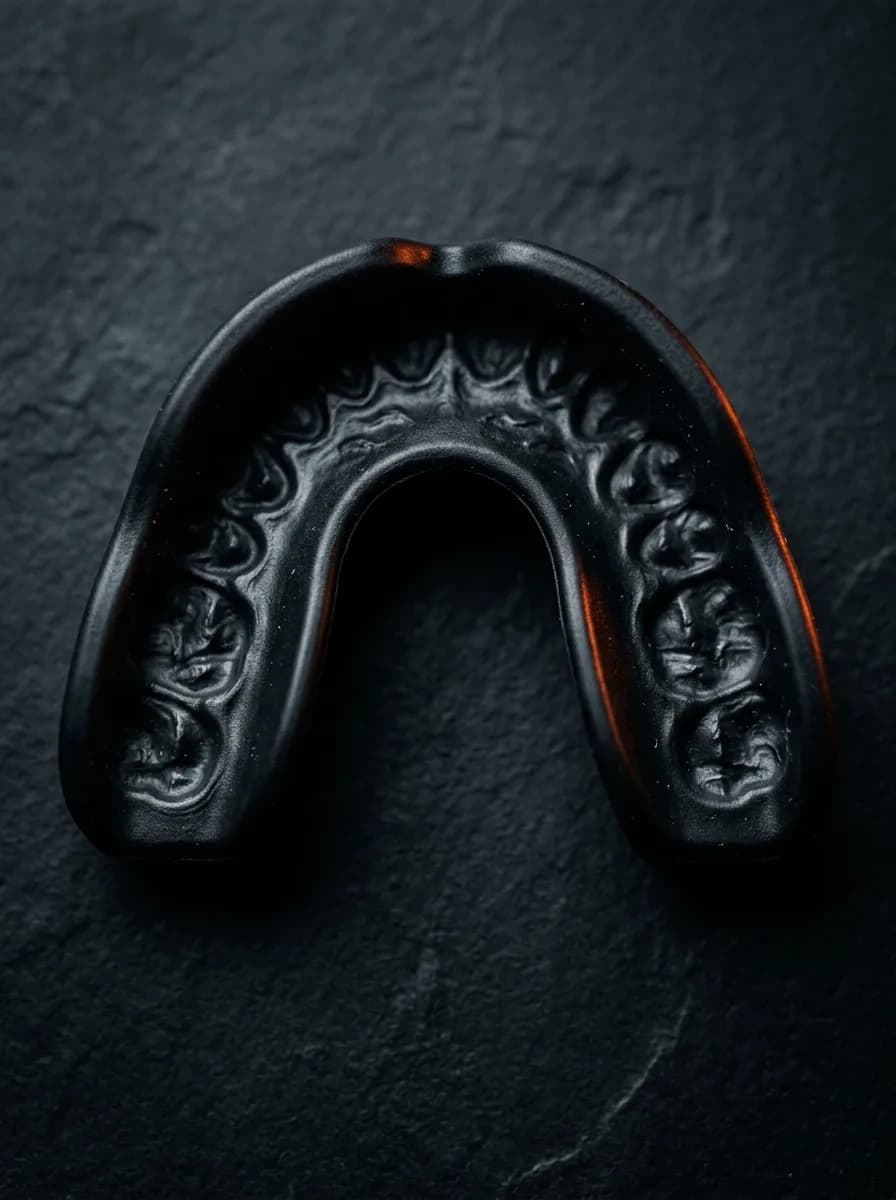
Search for lacrosse mouthguard rules and you'll still find pages telling you white and clear guards are illegal. For most American players that stopped being true some time ago. High school girls lost the color rule in 2024. High school boys lost it in 2026. The NCAA rulebooks don't limit color either. The parts that never went away are the ones that actually matter: you have to wear a guard, it goes inside your mouth, it covers your upper teeth, and anything bolted onto it has to be there to protect you. Below is every level, with the rule quoted from the book that owns it.
The short answer
Every major US level of lacrosse requires a mouthguard: NFHS high school boys and girls, and NCAA men and women. None of them restrict color any more, so white and clear guards are legal. The guard has to sit inside the mouth. NCAA rules say it must cover all of the upper teeth. Girls' and women's field players can't wear guards with protruding tabs, and boys' high school rules now ban decorative attachments.
Lacrosse mouthguard rules by level
| Level | Required? | Color | Other rules | Source |
|---|---|---|---|---|
| High school boys (NFHS) | Yes | Any, including white and clear (from 2026) | No attachments that don't protect the teeth or mouth | NFHS 2026, rule 1-9-1b(4 & 5) |
| High school girls (NFHS) | Yes, intra-oral | Any, graphics allowed (from 2024) | Field players: no protruding tabs, spinning parts or charms | NFHS 2024, rule 2-7-1 |
| NCAA men | Yes, intra-oral | "Clear or any other color" | Must cover all upper-jaw teeth | NCAA men's rules, 1-20 |
| NCAA women | Yes, intra-oral | No color rule in the book | Professionally manufactured, covers all upper teeth, no tabs for field players | NCAA women's rules, 2-17 |
| Youth, 14U and under | Check your league | Follows USA Lacrosse's youth rulebook | USA Lacrosse recommends a fitted guard at every level | USA Lacrosse position statement |
State associations and leagues can add their own rules on top of these, so treat this table as the baseline. If your league hands out its own rule sheet, that sheet is what your officials will go by.
High school boys (NFHS)
This is the change most players haven't caught up with. The NFHS 2026 boys' lacrosse changes rewrote rule 1-9-1b(4 & 5) so that it "eliminates the restrictions on color and prohibits items attached to the tooth and mouth protector that do not support the function of protecting the teeth and/or mouth" (NFHS 2026 rules changes). The NFHS explained it as bringing lacrosse in line with the other NFHS sports that require tooth and mouth protectors. USA Lacrosse's write-up says it plainly: there are "no longer any color restrictions for mouthguards or a lack of color (white and clear)," but purely decorative attachments are out (USA Lacrosse, January 2026).
The NFHS comments on the rule show how officials are supposed to think about it. The guard exists to protect the teeth, the mouth, and the lips if it has a lip guard. Anything added to it that doesn't do that job shouldn't be allowed, and neither should anything that raises the risk to the player wearing it (NFHS comments on the rules). So a lip guard still counts as protective. A purely decorative add-on doesn't.
High school girls (NFHS)
Girls got there two years earlier. For the 2024 season the NFHS reorganised rule 2-7-1 to match its other sports, and that change "eliminates restrictions related to color and graphics" (NFHS 2024 girls' changes). USA Lacrosse summarized the new rule like this: every player must wear an intra-oral tooth and mouth protector, and field players can't wear one with protruding tabs (USA Lacrosse, July 2023).
The NFHS 2024 interpretations spell out the details (NFHS girls' interpretations):
- Clear, white, colored and graphic guards are all permitted.
- Field players' guards can't have spinning parts, charms or protruding tabs.
- Clear aligners like Invisalign don't count as a mouth protector, because they aren't made to protect.
Note that the tab rule covers field players only. Goalkeepers aren't named in it.
NCAA men
The current NCAA men's rulebook settles color in one line: "All competing players shall wear intra-oral mouthpieces during play. The mouthpieces can be clear or any other color and shall cover all upper-jaw teeth" (NCAA men's lacrosse rules, Rule 1, Section 20). If you play without one, that's a technical foul. The book makes an exception when the guard gets knocked out during play.
A guard trimmed down to the front six teeth for comfort fails that coverage clause, whatever color it is.
NCAA women
The women's rulebook is the strictest of the four on what the guard actually is. "All players shall properly wear a professionally manufactured intra-oral mouthpiece that fully covers the upper jaw teeth." It can't be altered in a way that reduces protection, and field players can't have protruding tabs (NCAA women's lacrosse rules, Rule 2, Section 17). The book has no color requirement at all. Failing to wear the guard properly is a foul.
The same section recommends a properly fitted guard and gives three examples of how to get one: built on a model taken from an impression of your teeth, fitted by pressing your teeth into the material (that's boil-and-bite), or provided by a dental professional. Any of the three is legal. What the rulebook cares about is fit.
Youth lacrosse (14U and under)
USA Lacrosse writes a separate youth rulebook for ages 14U and below, and works with the NFHS on the high school boys' rules (USA Lacrosse). Youth leagues also tend to layer their own equipment rules on top, so the youth rulebook and your league's handbook decide what your kid's guard has to look like. Equipment checklists printed before 2026 often still say "visible color, not white or clear". A team-issued sheet can easily lag the rulebook by a season, so if yours still says that, ask the coach which edition they're working from.
Whatever the youth rules say about color, USA Lacrosse's Sports Science and Safety Committee recommends a properly fitted, properly worn mouthguard at every level, in all practices and games (USA Lacrosse mouthguard position statement).
Why were white mouthguards illegal in lacrosse?
The usual explanation is visibility. A brightly colored guard lets an official see at a glance whether a player has it in, and a clear or white guard behind a helmet cage is much harder to spot.
Governing bodies have since moved away from policing color and toward policing purpose: is the guard in, does it cover the teeth, and is everything on it there to protect you. The 2024 and 2026 NFHS changes both describe themselves as bringing lacrosse in line with other NFHS sports.
What still gets a guard flagged
Color is off the table. These are what officials can still call:
- No guard, or a guard that isn't in. Every book above calls for an intra-oral guard, so one hanging off your facemask doesn't count. The NCAA women's rule goes further and says it has to be worn "properly".
- Decorative attachments. High school boys can't wear add-ons that don't protect the teeth or mouth.
- Protruding tabs on girls' and women's field players. This applies under both NFHS and NCAA rules.
- A guard cut short. Both NCAA books require full upper-jaw coverage, and the women's book bans alterations that reduce protection.
- Aligners instead of a guard. NFHS girls' interpretations say aligners aren't protective equipment.
Do you need a mouthguard for lacrosse?
Yes, at every organized level above. Even where a youth league is loose about it, the sport's own governing body recommends one for every practice and game. Lacrosse puts your mouth in the way of two very different things: deliberate stick checks around the head and hands, and a hard rubber ball that arrives fast with very little warning. Our hockey mouthguard guide covers the same stick-and-projectile risks on ice.
Girls' and women's lacrosse is a different game to protect for. At NCAA level, field players must wear eye protection, but headgear is optional (NCAA women's rules, 2-18 and 2-20), so for many players there's no cage in front of the mouth and the guard is the only thing there. A mouthguard reduces the risk of dental injury. It doesn't make you immune, and you shouldn't count on it for anything beyond your teeth and mouth.
Picking a guard that passes and protects
Now that color is free, the rules only care about three things: the guard is inside your mouth, it covers your upper teeth, and nothing on it is decorative. Fit decides whether you can keep it in for a full game without chewing it, clenching to hold it up or trimming it. A guard that drops when you yell for the ball ends up in your glove by the second quarter. Our four-check fit test takes about a minute and tells you whether yours is up to it.
You have three options, the same three the NCAA women's book lists. A stock or boil-and-bite guard is cheap and legal, but it's molded by hand in about thirty seconds, which is where the trimming problems start. A dentist-made guard fits properly but usually costs $300 to $500 or more. An impression-based guard made from a model of your own teeth sits in between. The boil-and-bite vs custom comparison covers the trade-offs in detail.
Whichever route you go, run the fit checks again at the start of each season. Teenage mouths change, and a guard that fit in March can be loose by the following spring. For the wider picture on materials, cost and when custom is overkill, start with the complete custom mouthguard guide or compare tiers on the Sport Guard page.
If you play in braces
Plenty of high school players are in braces, and the rules don't exempt them. You still need a legal guard that covers the upper teeth. An at-home impression kit can't produce a braces-compatible guard, though, because the putty can't release cleanly from around brackets and wires. A guard that has to fit over braces needs an in-person professional dental scan. Ask your orthodontist what they recommend for the season, or get in touch with us before you order anything.