A boxing mouthguard has one job that sounds simple and isn't: stay exactly where you put it through twelve rounds of straights, hooks, uppercuts and clinch work, without you having to think about it. Search for one and you land on retailer category pages ranking guards by star count, not by whether they actually hold up to a jab landing flush. Here is what separates a guard that works from one that gets spat out by round three.
The short answer
A boxing mouthguard needs to do two things at once: stay fully seated through repeated strikes to the face and jaw, and let you breathe hard through full rounds without you fighting the guard for air. Fit and retention decide more of that than raw thickness does. For GumGear that's the Combat Guard ($169), a multi-layer upper guard built for striking sports.
Is a mouthguard required for boxing?
At every level that matters, yes. USA Boxing's National Rule Book states plainly, under Rule 39.1: "A Mouthpiece must be worn by boxers." That covers every USA Boxing-sanctioned amateur bout, from local club shows up to nationals. On the professional side, the Association of Boxing Commissions' Unified Rules of Boxing go further: "All professional boxers are required to wear a mouthpiece during competition. The round cannot begin without the mouthpiece." If it falls out mid-round, the referee calls time and has it replaced before the action resumes.
Outside of sanctioned competition, the rule usually comes from the gym, not a rulebook. Most coaches won't let you spar without one, full stop, and that's a sound policy to hold yourself to even on the bag or pads, since mouthguards cost far less than a dental visit.
On color: USA Boxing's general mouthpiece rule doesn't restrict it, and the rulebook's Masters-division reference states outright that "mouthguards may be any color." If you're competing under a different sanctioning body, confirm with them directly, since local rules can vary.
What to look for
Skip the star ratings. Here is what actually decides whether a boxing mouthguard holds up, in the order it matters:
- Retention without clenching. The guard has to stay seated through a jab, a check hook, a body shot that doubles you over — not just sit still when your mouth is closed and relaxed. A guard that depends on you biting down to hold it will slip the first time you're breathing hard.
- Full coverage to the last molar. Boxing loads the whole arch, not just the front teeth. A guard that stops short leaves the back teeth exposed on an angled shot.
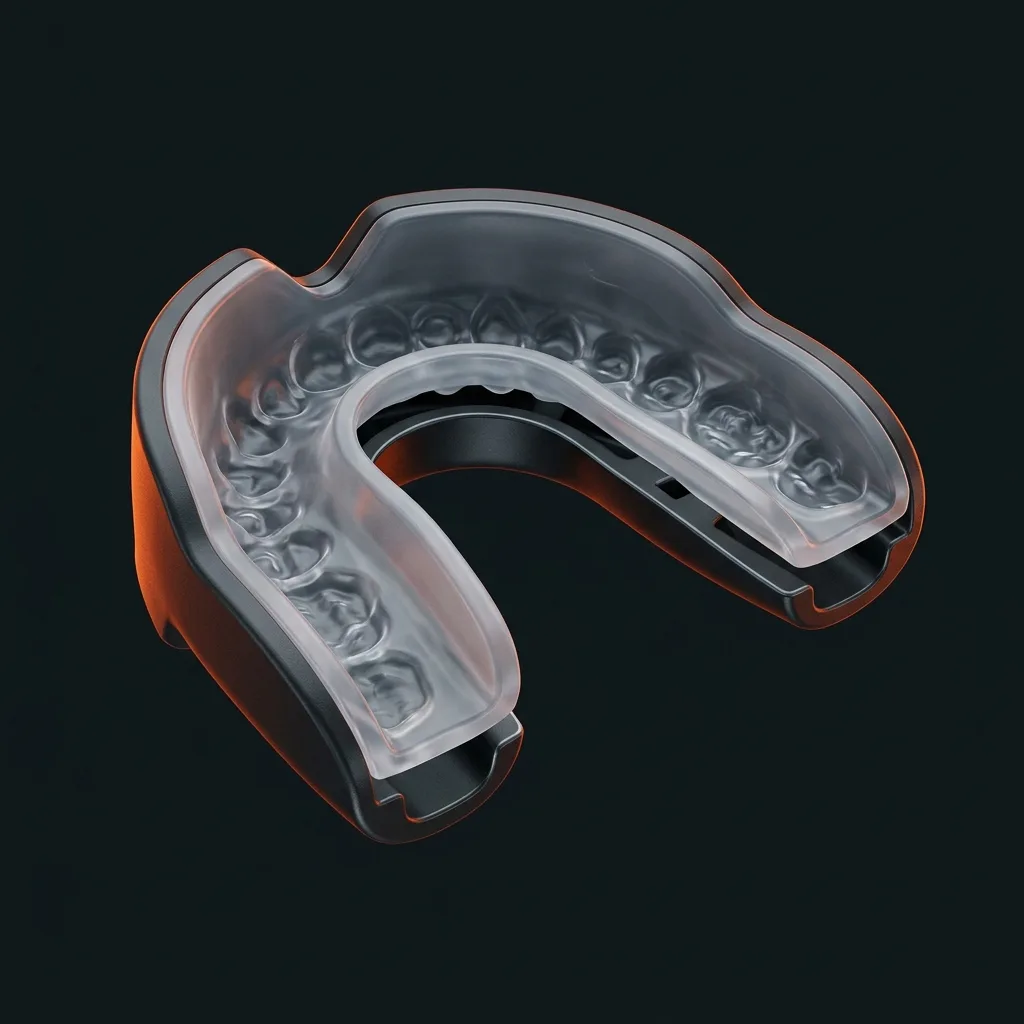
- Multi-layer construction. Pressure-laminated EVA in several layers is built to spread impact across the arch, rather than concentrating it at one or two points of contact.
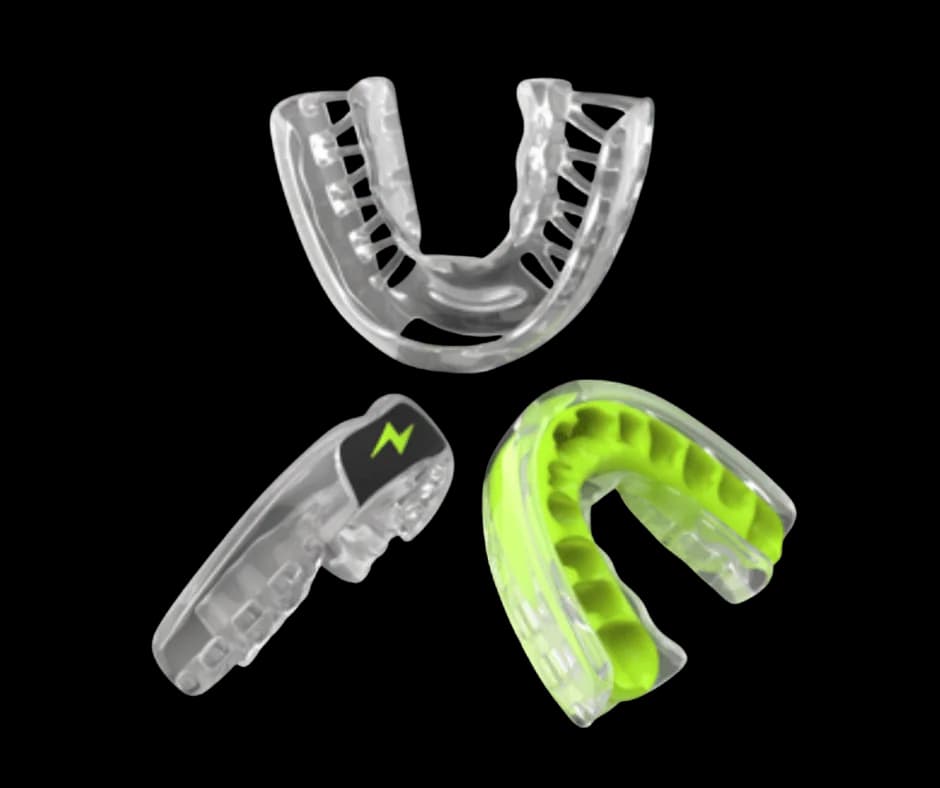
- Open airways. Twelve rounds, or even three hard rounds on the pads, is a cardio event. Raised bite ridges and clear breathing channels are designed to keep airflow open through hard rounds.
- Right thickness, placed correctly. Enough material over the front teeth and molars to cushion a closing jaw, without turning into a mouthful of bulk you're fighting to talk or breathe around.
Custom vs boil-and-bite
A boil-and-bite is a reasonable way to start out, and a lot of people spar in one for months before upgrading. Where it breaks down is retention under real pressure: a generic shell is held in place mostly by you clenching down on it, and by the third round of sparring your jaw is already busy. It also tends to loosen with regular use, and that fit problem tends to show up mid-exchange, which is the worst possible time for it.
A custom guard works the other way round. It's molded from your own dental impression, so the shape itself holds it in place instead of your jaw muscles. The mechanics of that difference are covered in full in boil-and-bite vs custom mouthguard. For the occasional pad session, a quality boil-and-bite is a fair call. For regular sparring, the custom fit is what keeps the guard where it needs to be when it counts.
How thick should it be?
The American College of Prosthodontists puts standard mouthguard thickness at 4 mm for most contact sports and 5–6 mm for higher-risk sports. Boxing sits in that higher band. GumGear's Combat Guard runs 6 mm at the front. That doesn't mean thicker is automatically better. Lab testing of EVA thickness found protection gains taper off above roughly 4 mm while breathing and speech get harder, so aim for enough material in the right places, not the thickest guard you can find. The full breakdown, including why fit matters more than the number on the box, is in how thick should a boxing mouthguard be.
Single or double guard?
A single-jaw upper guard is the standard in boxing, and that's what you'll see at essentially every level of the sport. Double-jaw guards exist and some fighters use them, but they restrict how far you can open your mouth, which fights you when you're trying to move air hard through a championship-distance fight or a long pad round. Unless your dentist has recommended a double for a specific structural reason, a custom-fit upper is the right call.
Testing it on the pads
A static fit check (seats without clenching, covers every tooth, doesn't trigger a gag, stays put when you press on it) is the starting point, and the full version is in how to fit a mouthguard. Boxing adds a dynamic test, because a guard that passes sitting still can still fail moving:
- Shadowbox a full round. Throw combinations, slip, roll your head. Afterward, check with your tongue for any movement, not just by feel.
- Take a hard pad round. Breathe through your mouth under real exertion and notice whether you're fighting the guard for air or nudging it forward with your tongue.
- Spar light. A guard that takes a clean jab or a grazing hook without shifting has passed the test that actually matters.
If it fails any of those, don't wait to see if it breaks in. GumGear guards carry a 30-day fit guarantee with a free remake, so get in touch rather than sparring in something that doesn't seat properly.
If you box in braces
One caveat worth knowing before you order. GumGear's at-home impression kit can't make a braces-compatible guard, because the impression putty won't release cleanly from around brackets and wires. A braces-compatible fit needs an in-person professional dental scan instead. Any dentist can take it, and you upload the file yourself at checkout. USA Boxing has its own requirement here too: boxers competing with braces must attach a signed Release to Compete with Braces form to their passbook (Rule 39.2), which waives dental coverage under the USA Boxing insurance program and, for boxers under 18, needs a parent or guardian's signature. Talk to your orthodontist about what they recommend for sparring, and get in touch with GumGear before ordering. The full process for braces across every sport is in mouthguards for braces.
How long it lasts
A combat-tier guard typically holds up for 3–9 months of regular sparring, depending on how often you train and how well you look after it. Watch for flattened or perforated bite ridges, cracks at the edges, a fit that's started to loosen, or a smell that survives a proper wash. Any of those means it's time for a new one, not a stopgap fix. The full set of wear signs, by sport, is in how long a mouthguard lasts.
The GumGear pick: Combat Guard
Boxing is a pure striking sport, so it sits squarely on the Combat Guard ($169), the heavier, multi-layer tier built for direct contact to the head rather than grappling. It's pressure-laminated from multiple layers of EVA over a cast of your own teeth, which is what lets the guard concentrate thickness where strikes actually land. Not sure it's the right tier for your training mix? The fit quiz walks you through it, or see how boxing stacks up against other striking and grappling sports in the combat sports mouthguard guide.
It's made from an impression you take at home with a kit we mail you, or from a digital scan if you've got one, and the finished guard reaches you in 10–14 days. The American Dental Association notes mouthguards help reduce the risk of broken teeth and other oral injuries during contact sports. GumGear makes no claim beyond that, and no claim at all about concussion.