Braces don't pause whatever sport you play, and most of those sports don't pause their mouthguard rule for braces either. What changes is which guard actually works. A standard boil-and-bite is built to seat flush against bare teeth, and brackets and wires get in the way of that seal. Here's what holds up by sport, what to use today, and what a custom guard needs instead of a home impression kit while you're in treatment.
The short answer
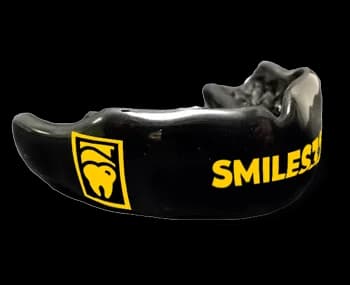
Yes, you can and generally should wear a mouthguard with braces for contact and combat sports — the AAO recommends it specifically for athletes in treatment (AAO, orthodontic mouthguards). The guard itself just has to change: a standard mouthguard isn't built to clear brackets and wires, so braces wearers need either an orthodontic boil-and-bite designed for that, or a custom guard made from a professional dental scan instead of an at-home impression.
Why a standard guard doesn't work
A standard boil-and-bite is designed to soften, press against bare teeth, and cool into a tight seal. Brackets and wires sit in the way of that seal on two fronts: the material can lock around the hardware as it cools, making the guard painful or impossible to remove, and even where it does come out it rarely covers the brackets cleanly enough to stop them from cutting the inside of the lips and cheeks on impact. That's also why the at-home impression kit behind a custom-fit guard hits the same wall — the impression putty needs to release cleanly from whatever it's molded around, and it can't do that over brackets without tearing or distorting. Both problems trace back to the same thing — neither process was designed with hardware already in the mouth.
Brackets and wires also raise the stakes of skipping a guard in the first place. On top of the usual tooth-and-jaw risk any contact athlete faces, exposed hardware gives an impact something extra to catch on, which is why a guard's job with braces is partly about protecting the hardware's surroundings, not only the teeth underneath it.
By sport: still required, braces or not
Braces don't exempt anyone from a sport's own mouthguard rule, and in one case they tighten it.
| Sport | Required? | What braces change | Source |
|---|---|---|---|
| Football | Yes (NFHS) | Nothing — required either way | NFHS SMAC position statement |
| Wrestling | Depends on braces | NFHS requires a guard only for wrestlers with braces; everyone else gets a recommendation | Full wrestling rules guide |
| Basketball | Not required by most governing bodies | No mandate either way; a braces-specific guard matters more here precisely because nothing requires one | — |
| Boxing & combat sports | Yes, for sparring and competition | Nothing about the requirement — but live strikes make a braces-specific fit matter more here than almost anywhere else | USA Boxing rulebook, rule 39.1 |
None of these rules care whether the guard came from a kit, a dentist, or a sporting-goods aisle. They care whether a guard that actually fits is in your mouth.
What works right now
If you're still in treatment and need something today, the category to look for is an orthodontic boil-and-bite designed to clear brackets and wires instead of locking around them. Shock Doctor and OPRO both sell lines marketed for braces wearers (Shock Doctor, braces-fit mouthguards; OPRO, braces mouthguards). It won't fit as precisely as a custom guard — it's still a generic shell pressed against your teeth by hand — but it's a legitimate stopgap while you're deciding on a custom fit or still early in treatment.
Getting a custom guard with braces
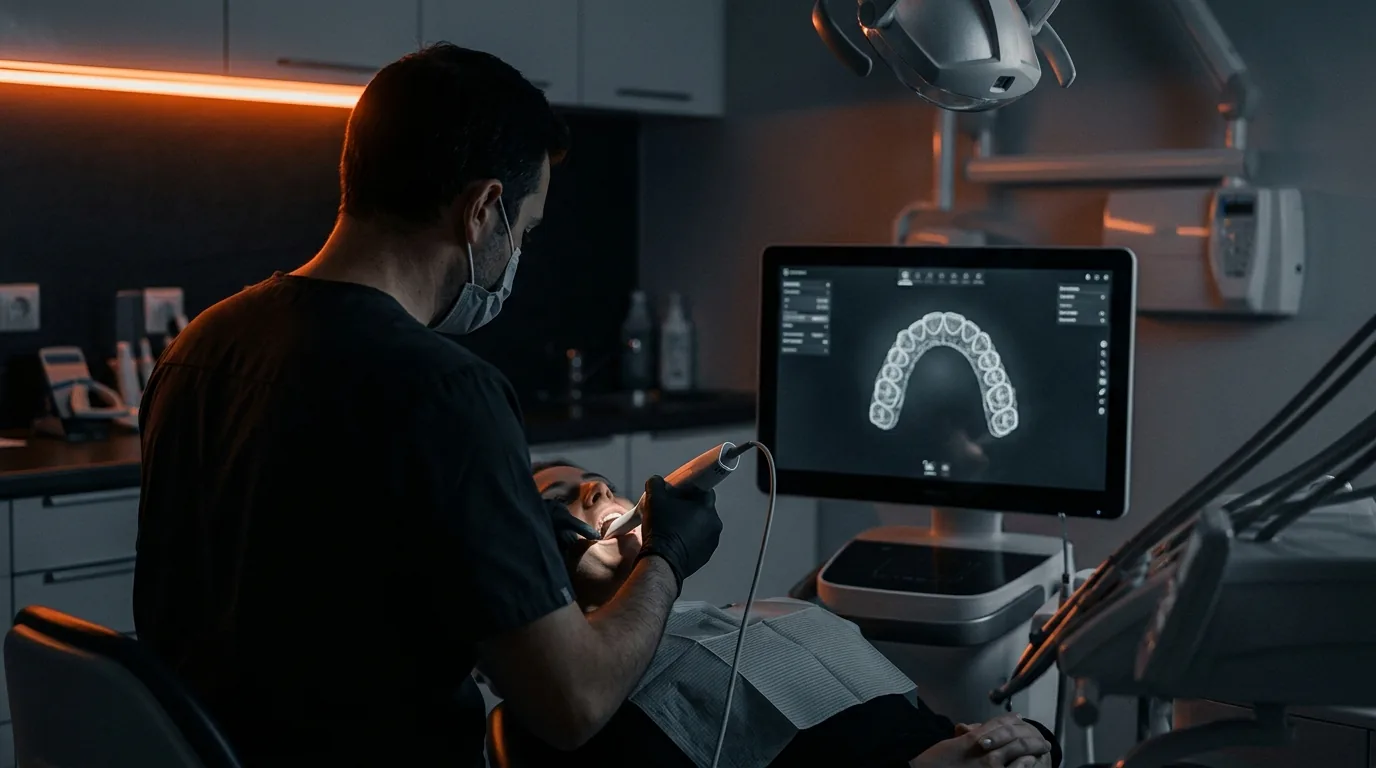
A custom guard is still possible with braces — it just starts from a different source than a home impression. Ask your orthodontist for a digital scan of your upper arch (the same kind of scan used to plan your treatment), saved as a .stl file, and upload it yourself at checkout instead of mailing back an impression tray. GumGear fabricates the same Contact Guard or Combat Guard from that scan — $99 or $169, same 10–14 days turnaround, same 30-day fit guarantee with a free remake if it doesn't fit. Dentists and orthodontists can't send the scan to us directly, so the upload step is on you or a parent. Get in touch with us before ordering so we can confirm the scan suits your treatment stage, and ask your orthodontist what they recommend for the season too. A parent or legal guardian places the order at checkout for anyone under 18 either way — that part of the process doesn't change between the impression-kit and scan routes.
If you don't have a scan on file, our guide to taking a dental impression at home explains the usual process for anyone without braces — useful context for understanding why that specific route isn't available to you right now, and what's different about the scan path instead.
Fit changes during treatment
Braces move teeth on purpose, which means a guard fitted from a scan taken in month one of treatment won't necessarily fit the same way in month eight. An orthodontic boil-and-bite can be re-softened and re-pressed as adjustments happen, which is one real advantage it has over a custom guard during active treatment. A scan-based custom guard doesn't have that option — if it stops seating properly, the fix is a new scan, not a reheat. Treat a scan-based guard as good for roughly the stretch between orthodontist visits where your bracket positions stay stable, and check the fit again at the next adjustment rather than assuming it still holds.
Braces on both arches
GumGear makes upper-arch guards only — no lower or double guard. For most sports that's not an issue, since the upper arch takes the brunt of impact and is what the rules above actually require. Wrestling is the exception worth checking closely: our wrestling mouthguard rules guide covers the top-and-bottom coverage question for wrestlers in braces on both arches. If your situation needs the lower arch covered too, the upper arch can still be a GumGear scan order, but you'll need a separate solution for the lower teeth — an orthodontic boil-and-bite is the usual stopgap until the braces come off. Confirm what your specific setup needs with your coach and orthodontist before you order anything.
When the braces come off
Once treatment ends, the at-home impression kit route opens back up — there's no hardware left for the putty to catch on. It's worth taking a fresh impression rather than assuming an old braces-era scan still matches your bite: teeth can shift in the months after braces come off, and the ADA notes that growing teens in particular may need to replace a mouthguard more often simply because their mouths are still changing (ADA MouthHealthy). A guard fitted right after braces come off is fitted to a mouth that's likely to keep settling for a while yet.
Mistakes that cost a bracket
- Using a standard boil-and-bite over braces anyway. It can lock around the hardware on cooling, and forcing it off risks the brackets and wires, not just the guard.
- Trying an at-home impression kit to save time. The putty has the same release problem as a boil-and-bite, just with a more expensive mistake if it tears mid-impression.
- Skipping the guard once braces are close to coming off. The hardware is still there until it's actually removed, so the rule and the risk don't change just because the end is in sight.
- Assuming one guard covers a double-braces case. If your sport's rule requires the lower arch covered too, a single upper guard — custom or stock — doesn't satisfy it on its own.
- Not telling your orthodontist you're ordering a scan-based guard. They're the one who can confirm the scan is current and that a guard won't interfere with where your treatment is at.
For the wider picture on materials, cost and the full custom-fit process outside of braces, start with the complete custom mouthguard guide.