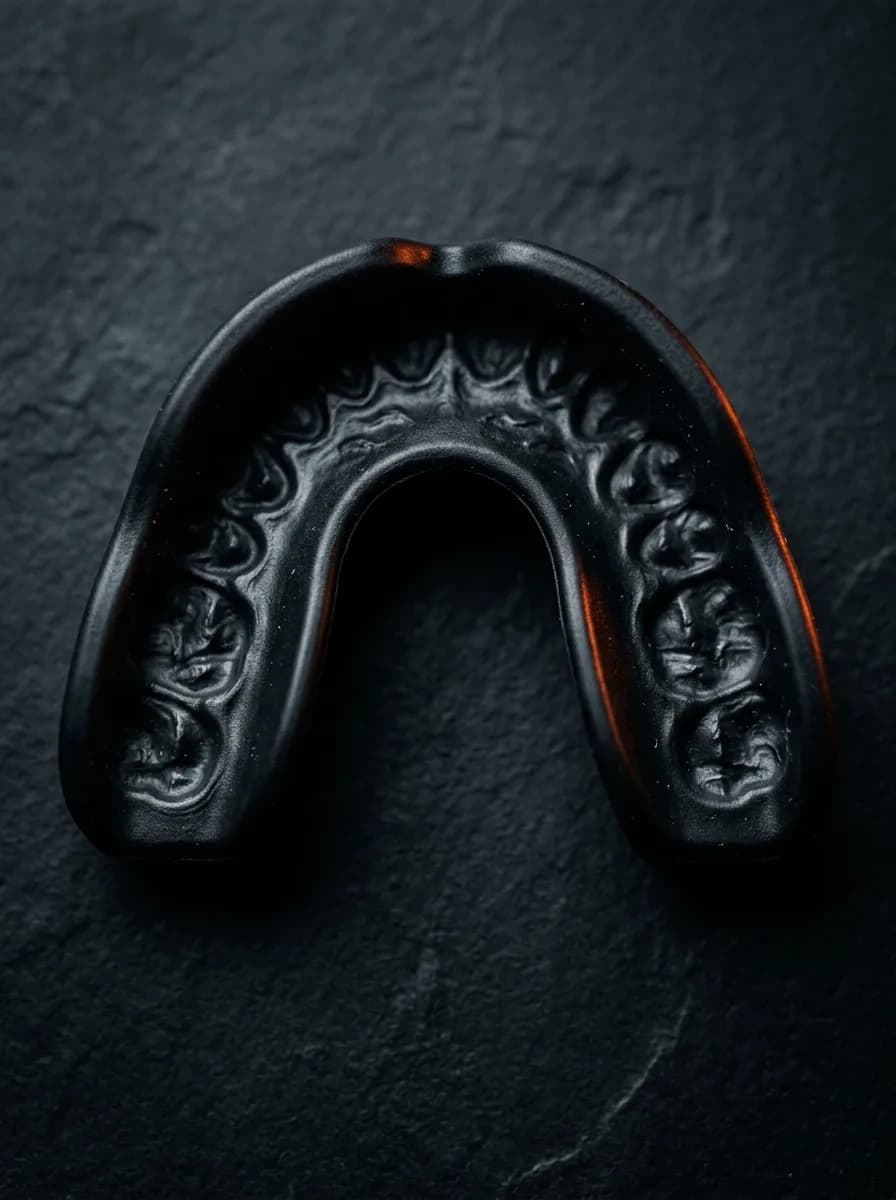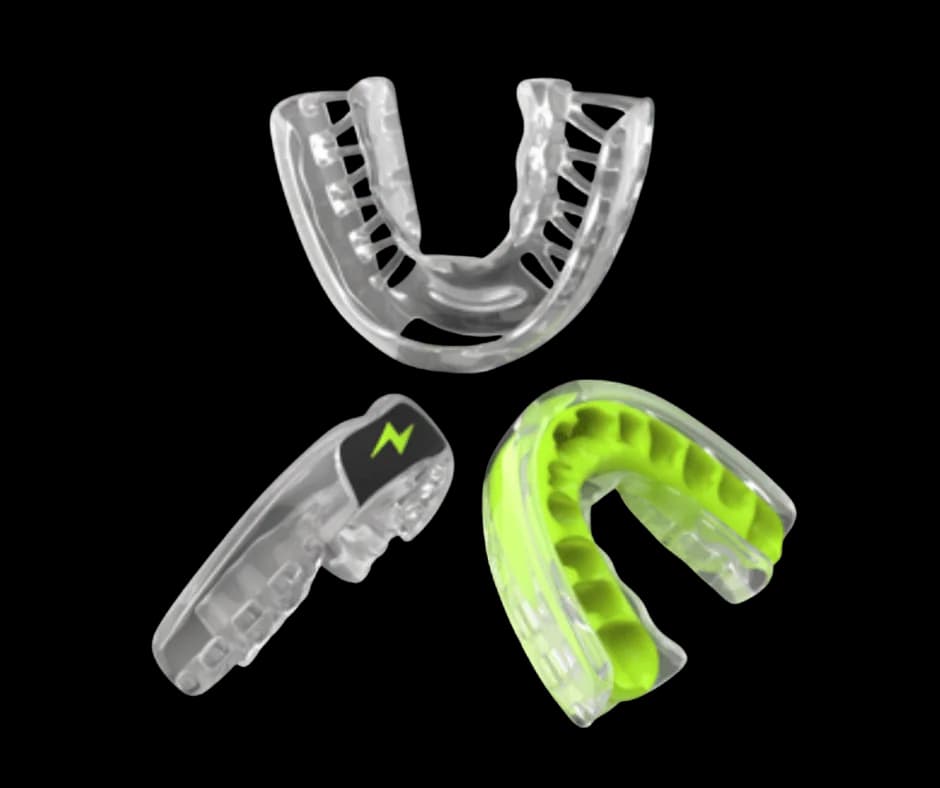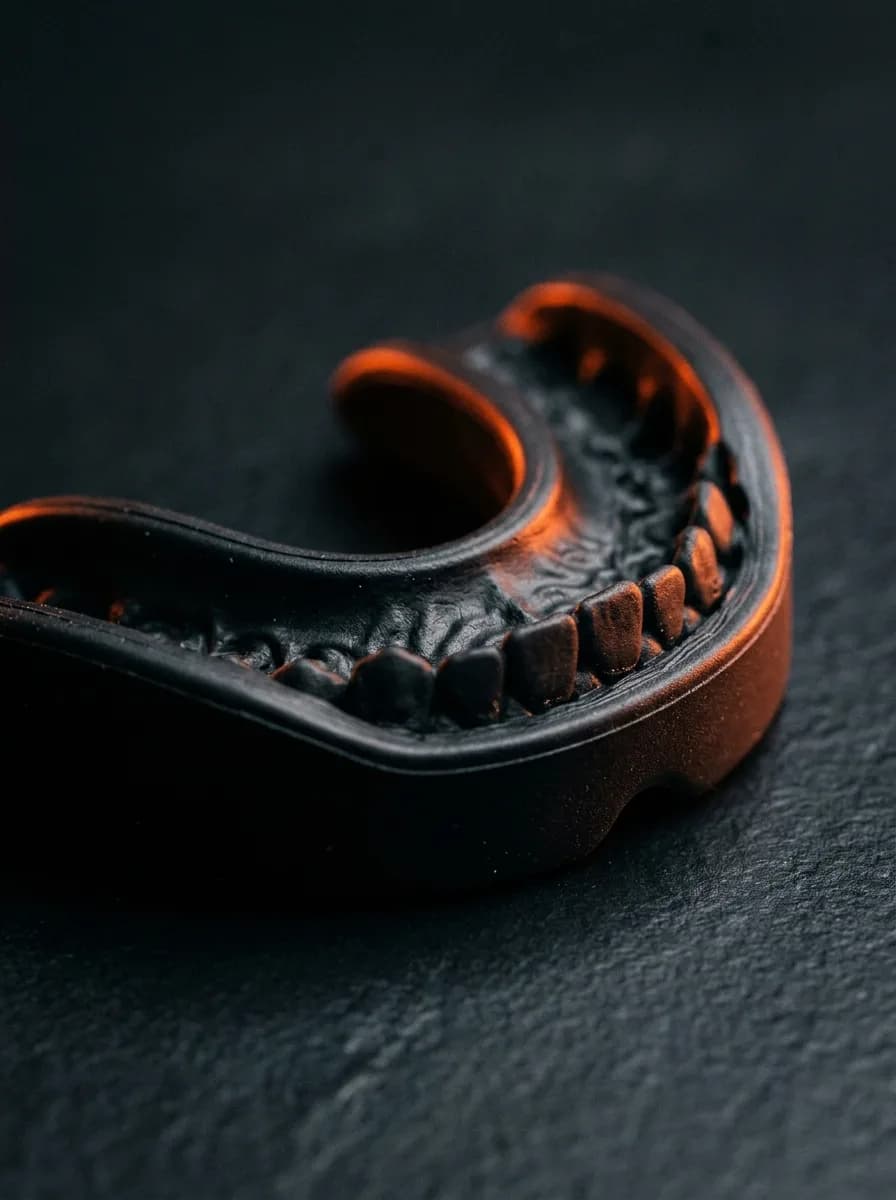
If you gag the second a mouthguard goes in, you are not weak-stomached and you are not doing it wrong. You are feeling a reflex doing exactly its job — reacting to something pressing where nothing should be pressing. The fix is almost never "get used to it." It is getting the back edge of the guard off the soft tissue it is sitting on. Here is what is actually triggering it, how to get through the session in front of you, and how to stop it coming back.
The short answer
A mouthguard makes you gag when its back edge touches your soft palate or the base of your tongue, firing the gag reflex. Usually the shell is simply too long for your arch. The real fix is to get that edge to stop at your last molar — not to trim away protection or to grit your teeth and tolerate it.
Why a mouthguard makes you gag
The gag reflex is an involuntary, protective response. According to the StatPearls physiology reference on the gag reflex, it is triggered by contact with the soft palate, the back of the throat, the tonsil area, or the posterior third of the tongue, and it is carried by the glossopharyngeal and vagus nerves. Your body reads pressure in that zone as a foreign object heading for your airway and contracts the pharynx to push it out. That is the sensation you feel when a guard rides too far back.
Three things put a guard into that zone:
- Length. A boil-and-bite shell is molded to a size category, not to you. If your arch is on the shorter side, the extra material at the back has nowhere to go but onto your soft palate.
- Looseness. A guard that is not properly retained drifts. Your tongue keeps nudging it, and every nudge walks the rear edge backwards into tissue that reacts.
- Clenching. Biting down hard to keep a loose guard in place can shove it rearward and press the back edge up and in — right where the reflex lives.
Notice that all three are fit problems, not willpower problems. That matters, because the standard internet advice — desensitise yourself, tough it out — only works when the guard is already the right length. If it is too long, you are training yourself to ignore a warning about material sitting where it gives you no protection anyway.
Where a guard is supposed to end
There is a defined target for how far back a mouthguard should go. The sports-dentistry position statement on custom-made mouthguards recommends covering the upper teeth back to at least the distal edge of the first molar, and to the second molar for sports with heavy contact, while keeping the palatal coverage minimal — just enough to retain the guard, no more. The American College of Prosthodontists makes the same point: coverage of the back teeth matters, extra material creeping onto the soft palate does not add protection.
So there is a right answer and a wrong answer for the rear edge. It should stop at the back molar. It should not drape onto the soft tissue behind it. A guard that gags you has crossed that line. The job is to move the line back to where it belongs, not to accept the guard as it is.
Why sparring makes it worse
Plenty of people can hold a guard in a quiet bathroom and only start gagging once they are moving. Combat training stacks the odds against you in a few specific ways. You breathe hard through your mouth, and the faster and more panicky that breathing gets, the more easily you gag (there is a fix for that below). Adrenaline makes you clench, which drives a loose guard backwards. And a guard that was borderline at rest gets walked out of position by impact, your tongue, and the sheer volume of air moving past it.
This is why "it is fine at home, I just gag when I spar" is so common, and why it is not a reason to doubt yourself. The round is exposing a fit that was marginal the whole time. Our combat sports mouthguard guide covers the broader set of demands a fighting guard has to meet; gagging is one failure mode of a guard that cannot stay put under load.
The trimming trap
The most-repeated fix online is to cut material off the back of the guard. It works — move the edge forward off the soft palate and the gagging stops. The trap is that most advice stops there, and does not tell you what you just gave up.
Trim past your last molar and you have removed coverage from the exact back teeth a side-on impact loads. A hook, a high body kick, an elbow in the clinch — those drive force into the rear of the arch, and that is now the part of your mouth with the least protection. People fix the gag, feel relieved, and quietly make the guard worse at the one thing it is for.
How to get through tonight's session
If you have training in a few hours and a guard that gags you, these get you through it while you sort out a real fix. The Cleveland Clinic's guidance on the gag reflex backs the same basics clinicians use before dental work.
- Breathe through your nose. Slow nasal breathing is the single biggest lever. Mouth-breathing fast makes the reflex more reactive; steady nose-breathing settles it.
- Seat it in one motion. Easing a guard slowly past the back of your mouth gives the reflex time to build. Push it home in one confident move, then breathe.
- Tuck your chin. Dropping your chin slightly toward your chest as you seat the guard changes the angle at the back of your mouth and takes pressure off the trigger zone.
- Desensitise in short sessions. Wear the guard for a few minutes at a time at home, over a couple of weeks, breathing through your nose. This genuinely helps — but only once the guard is the right length. Do not use it to paper over a shell that reaches your soft palate.
Trim, refit, or replace: a decision path
Work through it in this order.
- Is it loose? If the guard drops when you relax your jaw, or you clench to keep it in, fix retention first — a loose guard gags you because it keeps drifting back. Re-fit a boil-and-bite per the instructions, or run the full fit check in how to fit a mouthguard. Often a guard that seats and holds properly stops gagging on its own.
- Is it just slightly long? If retention is fine but the rear edge grazes your soft palate, a conservative trim — stopping at the last molar — is reasonable. Re-boil only if the maker allows it; repeated heat cycles degrade the material.
- Does it fail both? If you cannot make it both gag-free and molar-covering, the shell is the wrong shape for your mouth. Trimming further just trades protection for comfort. This is the point where a guard built to your actual arch is the honest answer, not another $15 shell with the same size categories.
How a cast-based fit removes the trade-off
The gag-versus-coverage trade-off only exists because a generic shell is one length and your mouth is another. A custom guard is made the other way around. You take a dental impression at home, and GumGear casts your exact upper arch from it, then pressure-laminates multiple layers of EVA over that cast. The rear edge is set to end at your last molar as the guard is fabricated — shaped to your palate, not trimmed toward it with scissors after the fact.
That is the whole point of the difference, and it is the same reasoning behind boil-and-bite versus custom: the guard clears your soft palate and still covers the back teeth, because both are built in from your anatomy rather than fought over on a blank. For boxing and other striking sports the tier is the Combat Guard ($169); for grappling and contact sports the Contact Guard ($99) is the lighter build. Both are custom-fit from your impression and carry a 30-day fit guarantee.
When it isn't the guard
Most mouthguard gagging is mechanical and fixable. A few things are not, and are worth flagging. Persistent nausea that lingers after the guard is out, gagging that comes with pain rather than just the reflex, or a gag reflex so strong it stops you taking a usable dental impression at all, are worth raising with a dentist rather than solving with a pair of scissors. The same is true if you wear braces: an at-home impression kit cannot make a braces-compatible guard, because the putty will not release cleanly from around the brackets. That needs an in-person professional scan, so talk to your orthodontist or get in touch with us before ordering. A mouthguard reduces the risk of dental injury rather than removing it, and it does not replace a professional's read on anything happening in your mouth that does not feel like a simple fit problem.