Search "boxing mouthguard thickness" and you get a wall of retailer pages throwing out a number — 3 mm here, 4 mm there, sometimes just "thicker is safer" — almost never with a study attached. The real answer comes from sports-dentistry research, and it is more useful than a single figure: there is a point where extra millimetres stop buying you protection and start costing you air. Here is what the testing shows, and why the number on the box matters less than whether the guard actually fits.
The short answer
For boxing, aim for roughly 4 mm of material over the front teeth, with 5 to 6 mm reasonable for the hardest-hitting striking sports. Beyond about 4 mm, laboratory testing shows protection improves only marginally while breathing and speech get harder, so thicker is not automatically better. Just as important: a guard only protects where it actually contacts your teeth, so fit decides how much of that thickness does any work at all.
What the research actually says
Two sources carry most of the weight here, and both are worth more than any retailer's rule of thumb. The American College of Prosthodontists, in its 2023 position statement on mouthguard use, states that the standard thickness is 4 mm for most contact sports, and that a 5 or 6 mm thickness be used for extreme sports. That is the clearest governing-body guidance available, and it maps directly onto how a boxing or MMA athlete should think about it: 4 mm is the baseline, and the heaviest-contact striking sports sit at the top of that range.
The "why 4 mm" comes from the lab. In a widely cited study of EVA mouthguard material, Westerman and colleagues (2002) found that energy absorption improved as thickness increased up to around 4 mm, after which the improvements lessened. In other words, the material does most of its useful work in the first few millimetres. That single finding is the reason the blanket claim "thicker is always more protective" does not survive contact with the data.
Why more than 4 mm stops helping
It is tempting to assume a mouthguard works like body armour, where more material simply means more protection. It does not. A mouthguard protects your teeth by doing two jobs: absorbing some of the impact energy, and spreading the rest across the whole dental arch instead of letting it concentrate on one or two teeth. The first few millimetres of EVA handle the bulk of the absorption. Past roughly 4 mm you are adding material that contributes little extra cushioning while taking up more room in a mouth that still needs to breathe and talk.
This is why fighters so often insist a thin guard cannot protect you in real sparring. They are half right. A genuinely thin guard does leave too little material to spread a hard impact. But the fix is not to chase the thickest guard on the shelf. It is to land in the 4 to 6 mm range with a guard that fits, which gets you essentially all the protection on offer without the downsides of excess bulk.
Why fit beats millimetres
Thickness only counts where the guard is in full contact with your teeth, and that is what the spec sheets leave out. A guard that rocks, lifts, or sits loose is only absorbing and spreading impact at the few points it actually touches. The millimetre rating on a loose guard describes the material, not the protection you are getting. That is why a precisely fitted 4 mm guard outperforms a bulky generic one that shifts the moment you take a shot.
A common complaint runs that a guard fits fine at rest but still does not feel shock-absorbent under a real hit. Usually that is a boil-and-bite that feels snug on the counter but was never shaped to the real geometry of the arch, so under impact it flexes and lets force through. Snug at rest and seated under load are two different things. The four checks that actually matter — retention without clenching, full coverage to the last molar, no gagging, no rocking under pressure — are laid out in our guide to how to fit a mouthguard.
The breathing and speech trade-off
Every extra millimetre you add is a millimetre your tongue, airway, and lips have to work around. For a striker, that is not a minor comfort issue. Late-round cardio depends partly on how much air you can move through your mouth, and an over-thick guard forces you to pull air around a wall of material or push it forward with your tongue to breathe. Overly thick guards also tend to get spat out or chewed loose by round three, which protects nothing.
That is the real reason the research sweet spot is a sweet spot and not a floor. You are balancing protection against the ability to breathe, talk, and keep the guard in your mouth under fatigue. Around 4 mm, with a bit more for the heaviest contact, is where those two curves cross. We cover the airflow side in more depth in the best mouthguard for MMA guide, because it is where breathing and thickness collide hardest.
Boxing, Muay Thai, MMA: same number?
Mostly, yes. Boxing, Muay Thai, kickboxing, and the striking side of MMA all load a mouthguard the same basic way: a blunt impact to the face drives force into the front teeth, and the guard has to absorb and spread it. Because the mechanism is shared, the thickness target is shared too. A multi-layer guard sitting in the 5 to 6 mm range at the front suits all of them. The differences between those sports show up in wear rate and retention demands, not in the ideal millimetre count.
Grappling-only training is the exception worth naming. Pure BJJ has far less direct striking to the front teeth, so it does not demand the same upper-range thickness. That is the logic behind running two tiers rather than one. For the full sport-by-sport breakdown, the combat sports mouthguard guide covers how each discipline stresses the guard differently.
If your guard feels too thick
"My mouthguard is too thick" is one of the most common complaints, and the instinct — grab scissors and shave it down — is the wrong move. Trimming the biting surface removes protection from exactly the spot that takes the hit, and you cannot add material back. Before you touch it, run through the real causes:
- It is not fully seated. A guard riding low on the teeth feels bulkier than one pushed fully home. Re-seat it and check again.
- It is a generic shell. A one-size boil-and-bite has to carry extra material everywhere to cover every size of mouth, so it reads as bulky even at a modest millimetre rating. A guard built to your arch puts material only where it is needed.
- You are new to it. The first week in any guard feels strange. If it passes the fit checks, give it a few sessions before judging the bulk.
- It genuinely is over-thick. Some guards are sold at 6 mm-plus as a selling point. If it fits and passes the checks but still crowds your airway, a correctly built guard at the right thickness is the answer — not shaving the one you have.
How GumGear builds thickness
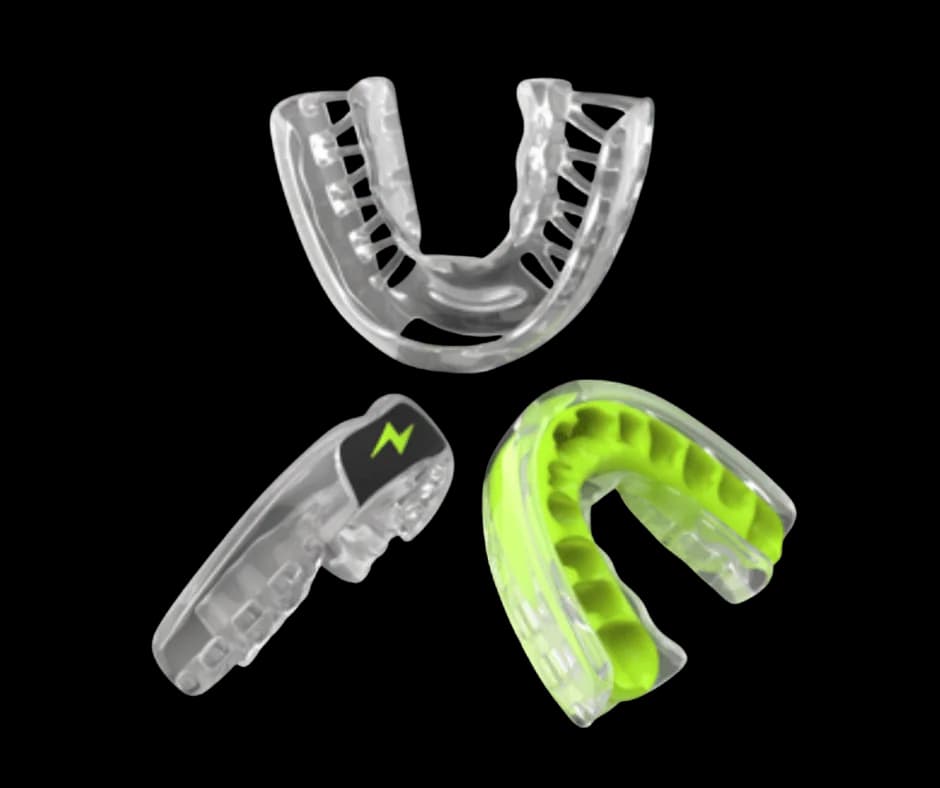
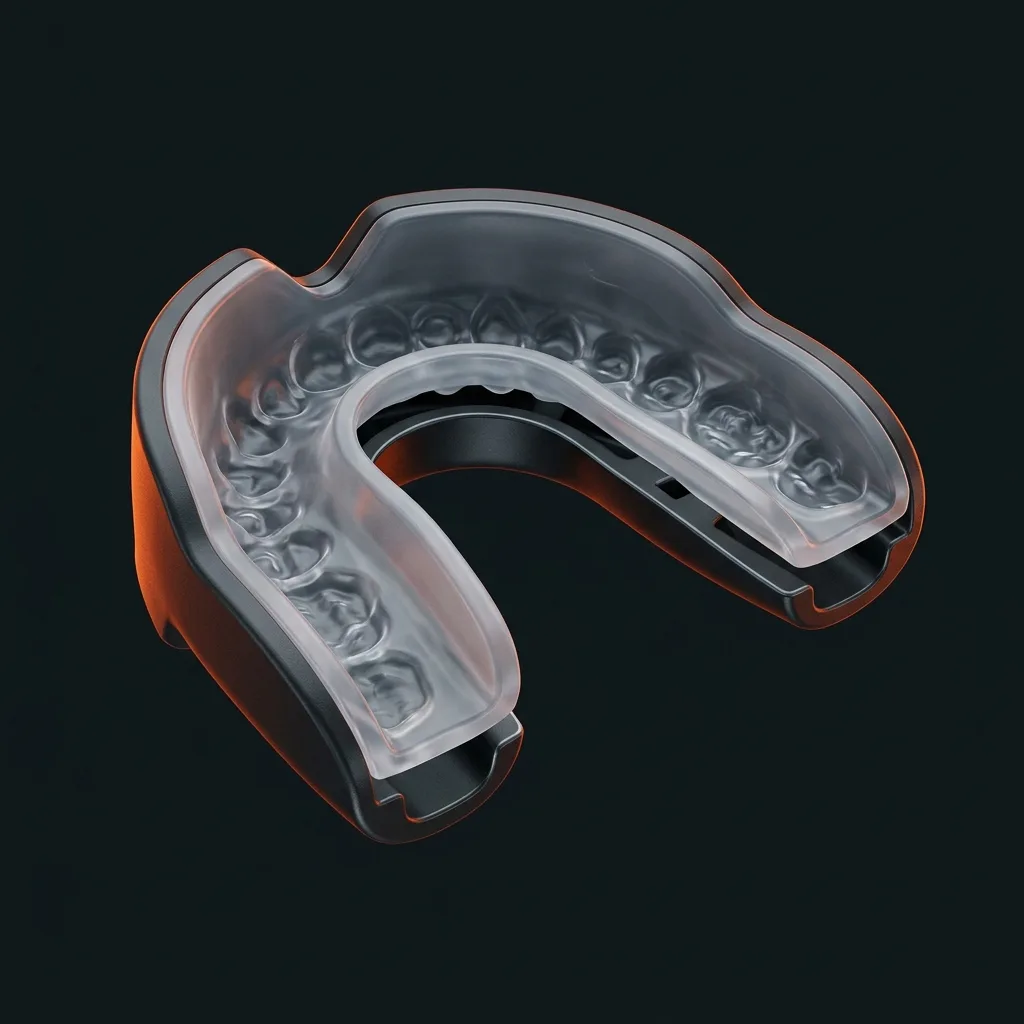
GumGear guards are pressure-laminated from multiple layers of EVA over a cast of your own teeth, which is the same method a dental lab uses. That construction is what lets the thickness sit where it matters — even across the arch, concentrated over the front teeth where strikes land — rather than piled on uniformly like a generic shell.
The two tiers map onto the research range directly. The Contact Guard ($99) runs 4 mm of dual-density EVA at the front, which matches the ACP's standard thickness for most contact sports — the right call for BJJ and other grappling or lower-strike training. The Combat Guard ($169) steps up to 6 mm of reinforced multi-layer EVA, sitting at the top of the ACP's 5 to 6 mm band for the highest-impact sports. That is the tier for boxing, Muay Thai, kickboxing, and MMA. Not sure which one your training calls for? The fit quiz walks you through it.
Picking the right thickness
Put the number in its place. The research says aim for about 4 mm at the front, step up toward 5 to 6 mm for the heaviest striking, and stop there — past that point you are trading away breathing and speech for protection that is barely improving. Then spend the rest of your attention on fit, because a perfectly fitted guard at the right thickness protects far better than a thicker one that shifts under impact.
For a striker, that means a multi-layer custom guard around 6 mm at the front that actually seats on your teeth. For grappling, 4 mm is plenty. Either way, the decision that changes your protection is not finding the thickest guard on the shelf — it is getting one built to your own bite. The boil-and-bite versus custom comparison covers why that fit difference does the heavy lifting.