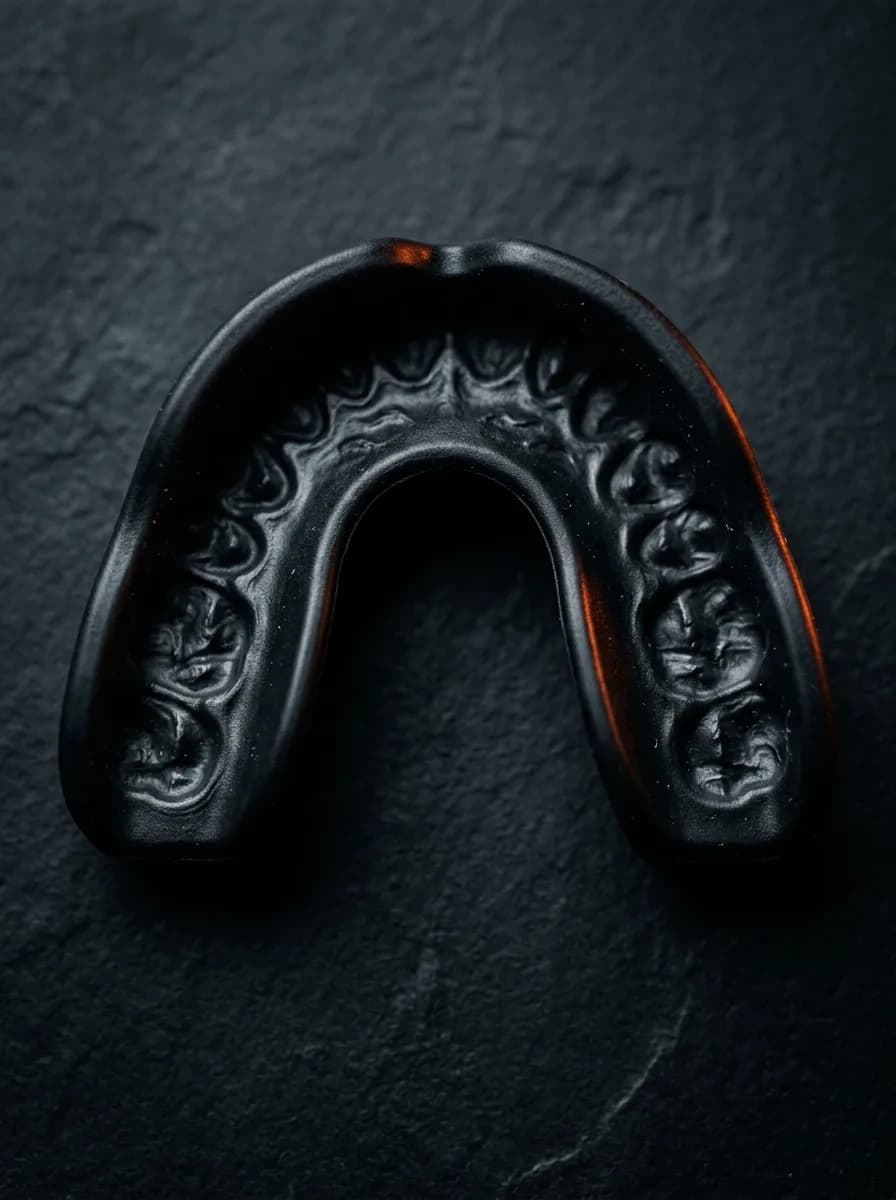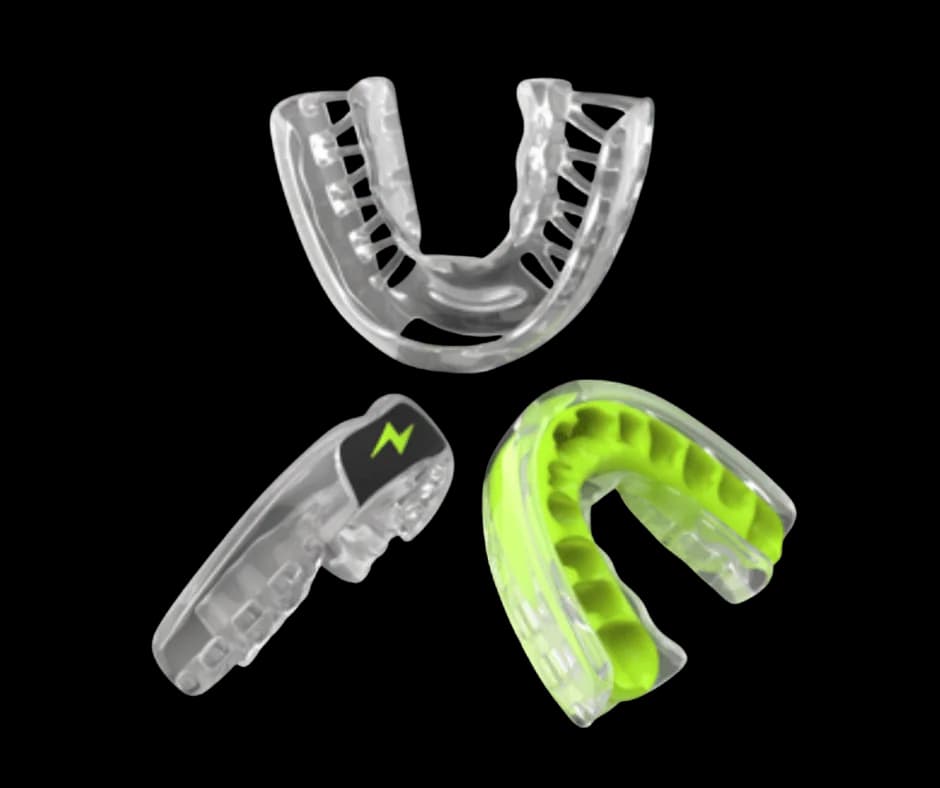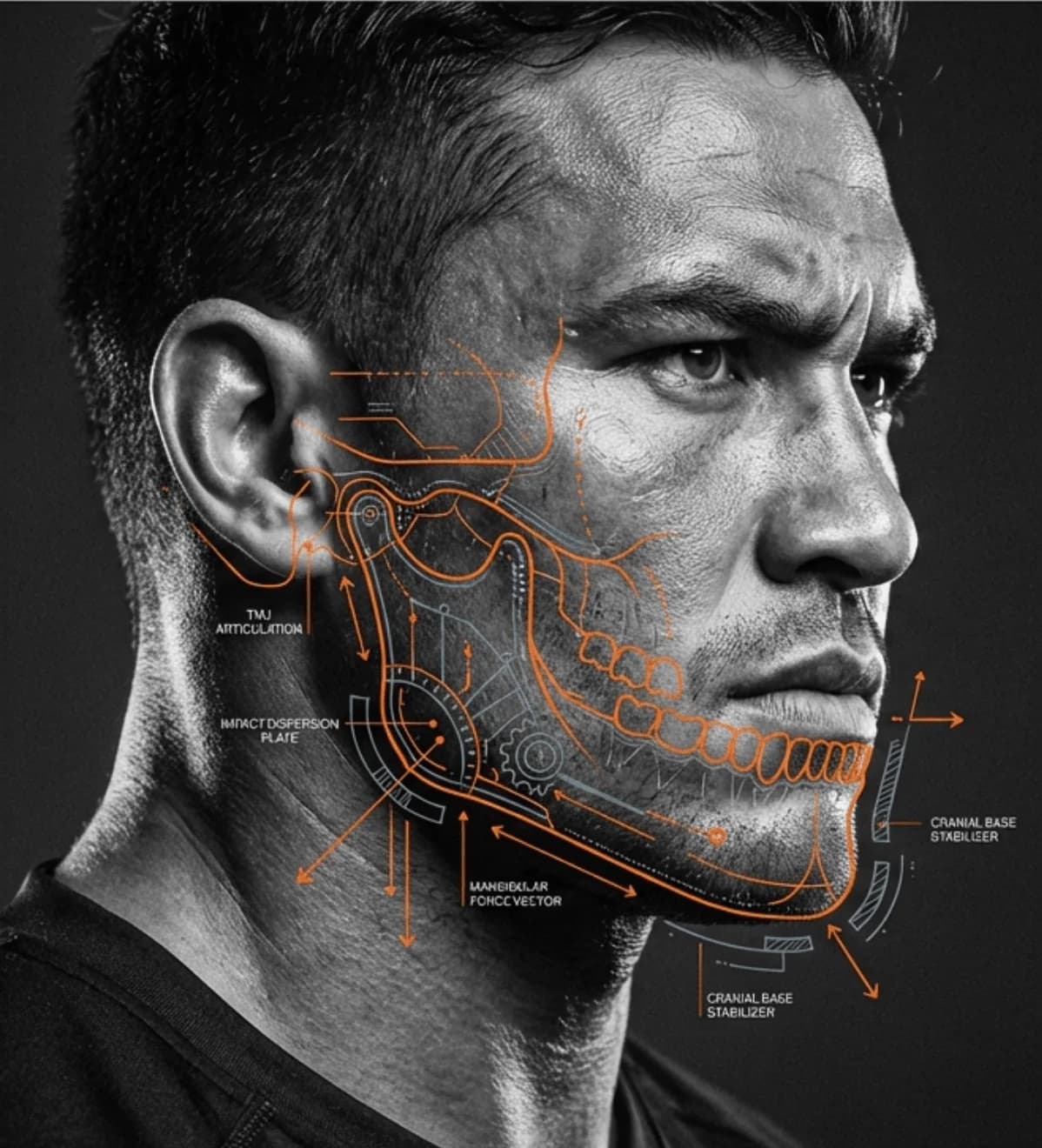
Your guard is fine on the walk to the ring. Then you open your mouth to breathe between exchanges, or shout a call on the field, and it drops onto your tongue. So you spend the rest of the session biting down to keep it there. Almost every time, this is a fit problem, and most fit problems come from a few predictable causes. Below is a quick test to find out which one you have, the causes in rough order of how common they are, and an honest call on when a re-boil will help and when you're wasting another kettle of water.
The short answer
A mouthguard keeps falling out because it doesn't grip the undercuts of your upper teeth, the narrow part near the gumline. That usually means the mold was under-softened or off-center, the shell is the wrong size or was trimmed too short, heat warped it, or your teeth have changed since you fitted it. A properly fitted guard stays put with your jaw relaxed and your mouth open.
The 30-second drop test
Do this at home, in front of a mirror, before you blame the brand or buy a new one. It tells you whether the guard is loose and also where it's letting go, which points to the cause.
- Seat it and let go. Push the guard up onto your top teeth, then fully relax your jaw. Your lower teeth shouldn't be touching it.
- Open wide. Open your mouth as wide as you would gasping for air in round three. Hold it there for five seconds.
- Talk. Count from one to ten out loud. Tongue movement is what pushes a marginal guard off its seat.
- Look down and cough. Tip your chin to your chest and cough twice. Gravity plus a sharp push of air is close to what a clinch or a scrum does.
- Press each side. Push up on the left molar area with your tongue, then the right. Watch for one side lifting.
If it stays seated through all five, it isn't loose. Your problem is probably habit (more on that below). If the front drops first, the guard isn't gripping your front teeth, which usually points to an under-softened or off-center mold. If one back corner lifts, the bite was uneven or that side was trimmed. If the whole thing sags evenly, suspect size, heat warping, or a shell that has been chewed thin. This test only covers retention. For the full set of fit checks (coverage to the last molar, gagging, rocking), use our guide on how to fit a mouthguard rather than repeating them here.
Should you have to bite down on it?
No. This question comes up a lot in boxing and BJJ forums, usually as "do you bite on it when you spar?" You will bite down when a shot is coming, because that's what a braced jaw does, and a guard should be comfortable to clench on. But between exchanges, your jaw should be able to hang loose while the guard stays on your top teeth by itself. If keeping it in takes constant clenching, the guard has stopped doing its job and your jaw muscles are doing it instead. Over a long session that clenching tires your jaw, and it hides the problem: the guard seems fine because you never let it test itself. If you're already getting jaw soreness, read mouthguard jaw pain: causes and fixes.
The causes, most common first
Most loose guards are boil-and-bite guards, so most of these causes come from the molding step. Stock guards (the ones you wear straight out of the packet) are a separate case. They aren't shaped to your teeth at all, so a loose fit is built in.
- The material wasn't soft enough. If the shell comes out of the water too early, or sits on the counter too long before you bite, it only takes a shallow outline of your teeth. A shallow outline never reaches the undercuts, and the undercuts are what hold a guard on. It's usually the first thing to check, and the front teeth tend to show it first.
- It wasn't centered when you bit. Bite with the shell a few millimetres to one side and one half of the arch gets a deep impression while the other half gets a skim. That guard locks on one side and peels off the other, usually when you talk or open wide.
- Wrong size, or trimmed too short. A shell that is too big flaps at the back and gets pushed off by your tongue. Too small and it stops short of your back teeth, losing the molars that anchor it. Cutting the back off to stop gagging does the same job with scissors. Every molar you trim away is grip you lose.
- Heat warped it. EVA softens as it warms, which is the whole point of boil-and-bite. That also means a hot car, a hot water rinse, or a sunny gym-bag pocket can relax the shape you made. The American Dental Association's guidance is to never leave a guard in the sun or in hot water. A warped guard usually feels looser everywhere, not on one side.
- Your mouth changed. The guard fit your teeth as they were on the day you molded it. New adult teeth coming through, teeth shifting after braces come off, a new crown or filling: any of these can leave an old guard sitting wrong. The ADA notes that children and teens may need to replace guards more often because their mouths are still growing. If your kid's guard fit in September and falls out by spring, that's usually why.
- It's worn out. Chewing on the guard on the bench, between rounds, or between drills grinds down the bite surface and stretches the walls. A chewed guard loosens gradually, so you often don't notice until it starts falling out. For the wear signs to look for, see how long a mouthguard lasts.
When a re-boil fixes it, and when it can't
Many boil-and-bite guards can be re-molded. Check your guard's own instructions first, because the softening time and whether a refit is supported vary by brand. A re-boil is worth trying when:
- The first mold was rushed: under-softened, cooled too long, or bitten off-center (causes 1 and 2).
- The shell hasn't been trimmed, chewed or punctured, so all the original material is still there to work with.
- It's been molded once, maybe twice. Each heat cycle takes something out of the material, so a fresh attempt on a third or fourth boil rarely beats the first.
When you re-mold, slow down at the step that went wrong. Center the shell using your front teeth as the guide before you close. Bite evenly. Suck hard to pull the material up into the gaps, and press the outside walls against your teeth with your fingers, especially at the back. Then cool it in cold water before you take it out.
A re-boil will not fix:
- A shell that is the wrong size. Heat changes its shape, not its length.
- A guard trimmed short at the back. You can't add material back.
- A guard chewed thin or torn. Re-molding thin material just gives you a thin, loose guard.
- A stock guard. It isn't designed to be molded at all.
If you're past one or two honest attempts and the drop test still fails, the shell itself has run out of room. We cover the trade-offs in boil-and-bite vs custom mouthguard.
Fixes that make it worse
- Biting harder to hold it in. This gets you through a session, but it tires your jaw and masks the fit problem.
- Trimming to stop it moving. Cutting away a section that feels like it's catching removes grip in that spot. It almost always makes retention worse.
- Denture adhesive or other glues. They're made for dentures, not for a sports guard taking hits, and they hide a fit that needs fixing. If you're reaching for the tube, you need a new guard.
- Re-boiling again and again. See above. After a couple of attempts, each new cycle usually makes the fit worse.
- Relying on a strap. A strap stops you losing the guard in hockey or lacrosse. It does nothing to keep it on your teeth, so you're still playing with a guard dangling in your mouth.
Why it drops out in your sport
Different sports find different weak points in a marginal fit.
- Boxing, Muay Thai, kickboxing. You breathe through your mouth late in rounds, and a shot to the chin snaps the lower jaw into the guard. A guard that only grips the front drops the moment you open up to breathe. It's a common complaint for exactly this reason. What fixes it is deep, even grip across the whole arch. Extra thickness on its own won't hold the guard up.
- MMA and BJJ. Scrambles and chokes push the guard from the inside (your tongue, under strain) and the outside (a forearm across the face). One-sided grip from an off-center bite shows up fast here.
- Hockey and lacrosse. The guard goes in and out on every shift, often one-handed with a glove on, and gets chewed on the bench. Half-seated re-insertion and chewed walls are the usual causes, not the original mold.
- Rugby, basketball, football. Constant talking: lineout calls, switching on defense, play calls. Tongue movement during speech is the thing most likely to lever a loose guard off, and it's exactly what step 3 of the drop test checks.
When to stop re-molding
If the guard fails the drop test after a careful re-mold, or you keep coming back to causes 3 to 6, better technique won't save it. A boil-and-bite is a size-category shell pressed onto your teeth by hand in under a minute, and there's a limit to how closely it can follow the undercuts of your particular mouth. A custom-fit guard is made the other way round. Your teeth are captured first, from a dental impression, and the guard is built on a model of them, so the grip comes from your real tooth shape instead of how hard you happened to bite on a warm shell.
Not sure which tier suits your sport? The Sport Guard quiz takes a minute, or go straight to the Contact Guard or Combat Guard. If you want the bigger picture first, including how a custom guard compares on cost with a dentist-made one, start with the complete custom mouthguard guide.
If you have braces
Braces move your teeth, and brackets and wires change the shape a guard has to grip, so expect a molded guard to loosen as treatment goes on. Our at-home impression kit can't make a braces-compatible guard, because the impression putty can't release cleanly around brackets and wires. A guard for braces needs an in-person professional dental scan. Ask your orthodontist, or contact us before ordering and we'll talk you through options.