Muay Thai is the art of eight limbs, and most of those limbs end up near your face at some point. What sets it apart from boxing or MMA is the mix. A teep that catches you climbing in, an elbow in the pocket, a knee up the middle out of the clinch, and long rounds of neck wrestling with your jaw clenched the whole time. A Muay Thai mouthguard has to hold through all of that and still let you breathe. Here is what actually matters when you pick one.
The short answer
The best mouthguard for Muay Thai is a custom-fit, multi-layer upper guard that stays seated through clinch work and lets you breathe through full rounds. Fit and retention matter more than raw thickness. For GumGear that is the Combat Guard ($169), built for striking sports. A mouthguard reduces the risk of dental injury; it does not prevent concussion.
What Muay Thai does to a mouthguard
Every combat sport stresses a guard, but the pattern is sport-specific. Muay Thai's is built around the clinch and the eight weapons, so the guard faces a few distinct jobs in a single round:
- Clinch pressure. Neck wrestling means your jaw is clenched for control for long stretches, not just at the moment of a strike. The guard absorbs sustained bite force and has to stay put while your head is being pulled and posted on.
- Knees and elbows up the middle. A knee to the chin or an elbow landing high drives your lower jaw up into the upper. The guard's job is to cushion that closure and spread it across the arch instead of letting it load a single tooth.
- Teeps and push kicks. A foot to the face on the way in is a flat, blunt impact across the front teeth. The front of the guard takes it and has to pass the force back along the arch toward the molars.
- Full rounds of mouth breathing. Thai pads and clinch rounds are a cardio event. A guard you cannot breathe around is one you will push out with your tongue by the third round.
That list leaves out takedowns and ground exchanges, and that is the line between Muay Thai and MMA. It is why a guard that is great for the cage can be more than you need on the pads. If you cross-train, the MMA mouthguard guide covers the ground side.
The spec checklist
Skip the ranked product lists. Here is what a guard has to do for Muay Thai, in the order that decides whether it works:
- Custom fit. The guard has to seat on your own teeth and stay there without you clenching to hold it. This is the single biggest factor, and it is the one a generic shell cannot solve.
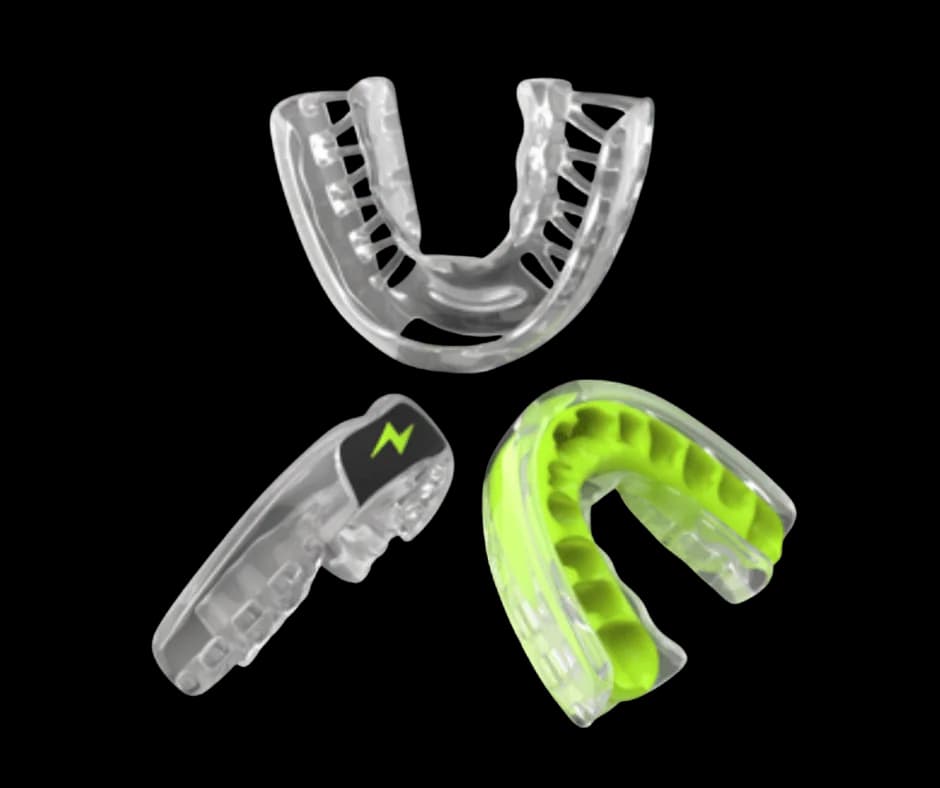
- Multi-layer construction. Pressure-laminated EVA in several layers absorbs and spreads impact far better than a single-layer shell of the same thickness.
- Retention under clinch load. It has to hold while your head is pulled off-axis and posted on, not only when you bite straight down.
- Right thickness, in the right places. Enough over the front teeth and molars to cushion a closing jaw, without turning the guard into something you fight to breathe around.
- Open breathing channels. Raised bite ridges and clear airways so you can move air hard, round after round.
How thick should a Muay Thai guard be?
This is the question that gets asked most and answered worst. The American College of Prosthodontists puts standard mouthguard thickness at 4 mm for most contact sports, and 5–6 mm for higher-risk sports. Muay Thai, with strikes landing on the face, sits in that higher band. GumGear's Combat Guard runs 6 mm over the front teeth, at the top of the recommended range.
What that number does not mean is “thicker is always safer.” The research a lot of that guidance rests on found protection gains lessen above about 4 mm, while comfort and breathing keep getting worse. Past a point you are adding bulk you have to fight to breathe around for no real protection return. The aim is enough material in the places that take impact, shaped to your own bite, not the thickest slab you can wedge in.
Custom vs boil-and-bite
A boil-and-bite is a reasonable way to start Muay Thai, and plenty of people spar in one for a while. The limit shows up in the clinch. A generic shell is held in place mostly by you biting down on it, and in neck wrestling your jaw is already doing a job, so the guard drifts, loosens and ends up getting chewed or spat forward. It also tends to loosen within weeks to a few months of regular use.
A custom guard is made the other way round. The fit comes from the shape of your own teeth, so retention does not depend on effort. The full mechanics are in boil-and-bite vs custom. For occasional, light training a quality boil-and-bite is a fair call; for regular sparring the custom fit is what keeps a guard where it needs to be.
Single or double guard?
Double-jaw guards are marketed for combat sports, but a single upper is the standard for Muay Thai. The clinch is the reason. A double guard restricts how far you can open your mouth, which fights you when you are breathing hard in neck wrestling and late rounds. Single-jaw upper is the default unless your dentist has flagged a structural reason for a double, such as a prior jaw issue, in which case follow their advice over any buying guide.
Breathing through the clinch
Airflow is not a comfort nicety in Muay Thai, it is part of your cardio. A guard with raised bite ridges and clear breathing channels moves more air than a flat-faced boil-and-bite, and that shows up most in the rounds where you are tired and clinching. Better airflow makes those rounds easier to push through. Your cardio is the same; you are just not fighting the guard for air.
You can test it on the pads. Push a hard two minutes, then clinch and knee for a minute with the guard in. If you are pulling air against the guard, or nudging it forward with your tongue to breathe, the fit or the profile is working against you.
Testing a guard for Muay Thai
A static fit check is the starting point, and the general version lives in how to fit a mouthguard. Muay Thai adds a couple of checks because of the clinch:
- Clinch minute. Tie up with a partner and pummel for a minute with your jaw working. Afterwards, check for movement with your tongue, not just by feel.
- Head posted off-axis. Have a partner lightly post your head to one side, the way a clinch does. The guard should not lift or rotate.
- Hard pad round for air. Breathe hard through your mouth and see whether you are fighting the guard to do it.
If it fails any of these, do not wait to see if it settles. A fit problem on a GumGear guard is covered by our 30-day fit guarantee, so get in touch rather than training in a guard that does not seat.
The GumGear pick: Combat Guard
For Muay Thai the answer is the Combat Guard ($169). The lighter Contact Guard ($99) is built for grappling and contact sports without strikes to the head; Muay Thai's teeps, knees and elbows call for the heavier multi-layer build and the extra thickness over the front teeth. If you are weighing it against other combat sports first, start with the combat sports mouthguard guide, or use the sport quiz to land on a tier.
It is made from an impression you take at home, with a kit we mail you, and the finished guard reaches you in 10–14 days. Expect to replace a Muay Thai guard every 3–9 months depending on how often you spar. A guard that takes direct strikes wears through its outer layers sooner, which is normal, not a defect. How to read the wear signs is in how long a mouthguard lasts.
If you train in braces
One fit caveat. GumGear's at-home impression kit cannot make a braces-compatible guard, because the putty will not release cleanly from around brackets and wires. A braces-compatible fit needs an in-person professional dental scan, so get in touch with us before ordering if you train in braces, and ask your orthodontist what they recommend for sparring in the meantime. A mouthguard reduces the risk of dental injury; after a hard knee or elbow, stop and see a doctor if you feel confused, nauseous or have a worsening headache.