Football doesn't cut or slash at a mouthguard the way a stick sport does. It drives straight into it — a forearm at the line, a helmet in a pileup, the ball itself on a bad bounce off a facemask. Every organized level above flag football requires a guard for exactly that reason, and most youth leagues go further and require it tethered to the helmet. Here is what each rulebook actually requires, how strapped and lip-guard styles differ, what changes for a kid who's still growing into bigger pads every season, and what braces changes about the fitting process.
The short answer
A football mouthguard is required at essentially every organized level: NFHS high school, NCAA college, and most youth tackle leagues, which also require it strapped to the facemask. The guard has to sit over your upper teeth and stay there through contact. Past that baseline, strapped vs. strapless, lip-guard coverage, and stock vs. custom fit are choices, not rules — the NFL is the one level that doesn't require a mouthguard at all.
What football does to a mouthguard
Most contact sports load a mouthguard from one direction at a time. Football tends to load it from the front and the side in the same play. A lineman drives through contact on nearly every snap, taking compressive force straight into the jaw. A ball carrier or tackler takes a shoulder or helmet from an angle that twists the jaw instead of just compressing it. And on any given play, a stray helmet or forearm can land on the mouth itself, which is the scenario a mouthguard is there to answer whether or not the hit was clean. That's why, whatever position you play, the rulebooks below boil down to the same two things: cover the teeth, and still be there in the fourth quarter.
Is a mouthguard required?
| Level | Required? | Strap | Other rules | Source |
|---|---|---|---|---|
| NFHS high school | Yes | Not mandated by NFHS itself; check your state association | No attachments that don't serve a protective purpose (new for 2026) | NFHS, rule 1-5-1d(5) |
| NCAA | Yes | Not specified in the rulebook | Readily visible color, not white or transparent; covers all upper teeth | NCAA football rules |
| Youth tackle (Pop Warner) | Yes | Required, tethered to the facemask | Medically prescribed guards allowed with a doctor's note | Pop Warner official rulebook |
| Flag football | Varies by league | Varies by league | No helmet-to-helmet contact changes the risk picture; check your league | League handbook |
| NFL | No | — | Left to the player | NBC Sports Boston |
NFHS sport-safety guidance mandates mouthguards in football alongside field hockey, ice hockey, lacrosse and wrestling (NFHS SMAC position statement), and the 2026 rule change on attachments is about what can be bolted onto the guard, not whether you need one — it tightens the requirement rather than loosening it. In a youth tackle league, budget for a strap. In high school or college, only the guard itself is mandatory; the strap is your call.
Strapped, strapless and lip guards
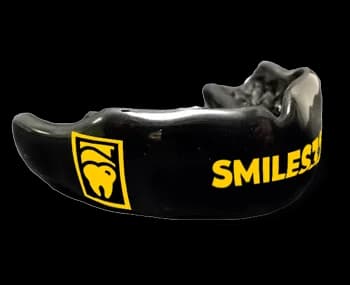
A strapped mouthguard has a short tether that clips to the facemask, so the guard can't end up on the turf mid-play. That's the standard most youth tackle leagues require, mainly because a dropped guard in a pileup is a delay and a sanitation problem at once. High school and college skill-position players — receivers, defensive backs, quarterbacks — more often go strapless, trading the tether for slightly less bulk and one less thing flapping around during a sprint. Linemen tend to keep the strap regardless of the rule, since they're less likely to need to talk clearly mid-play and more likely to lose an unstrapped guard in a scrum.
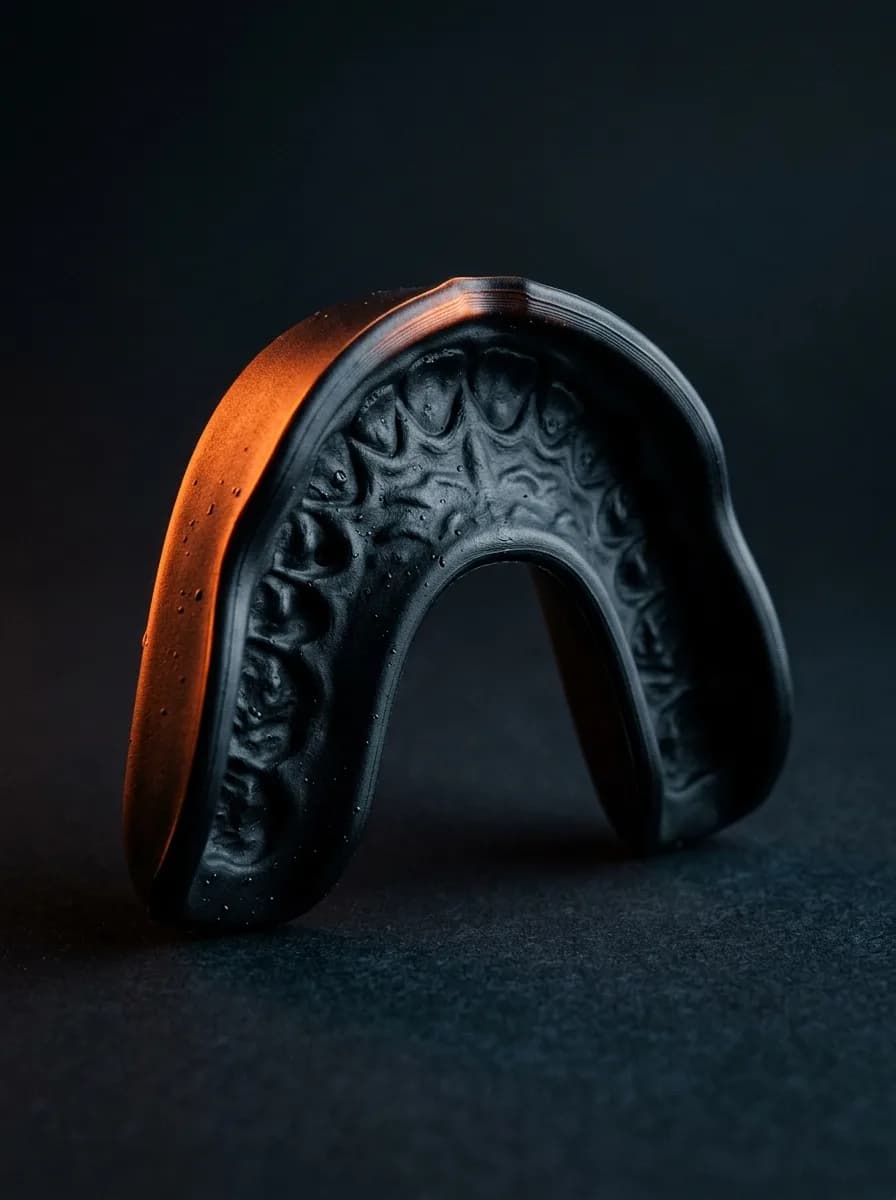
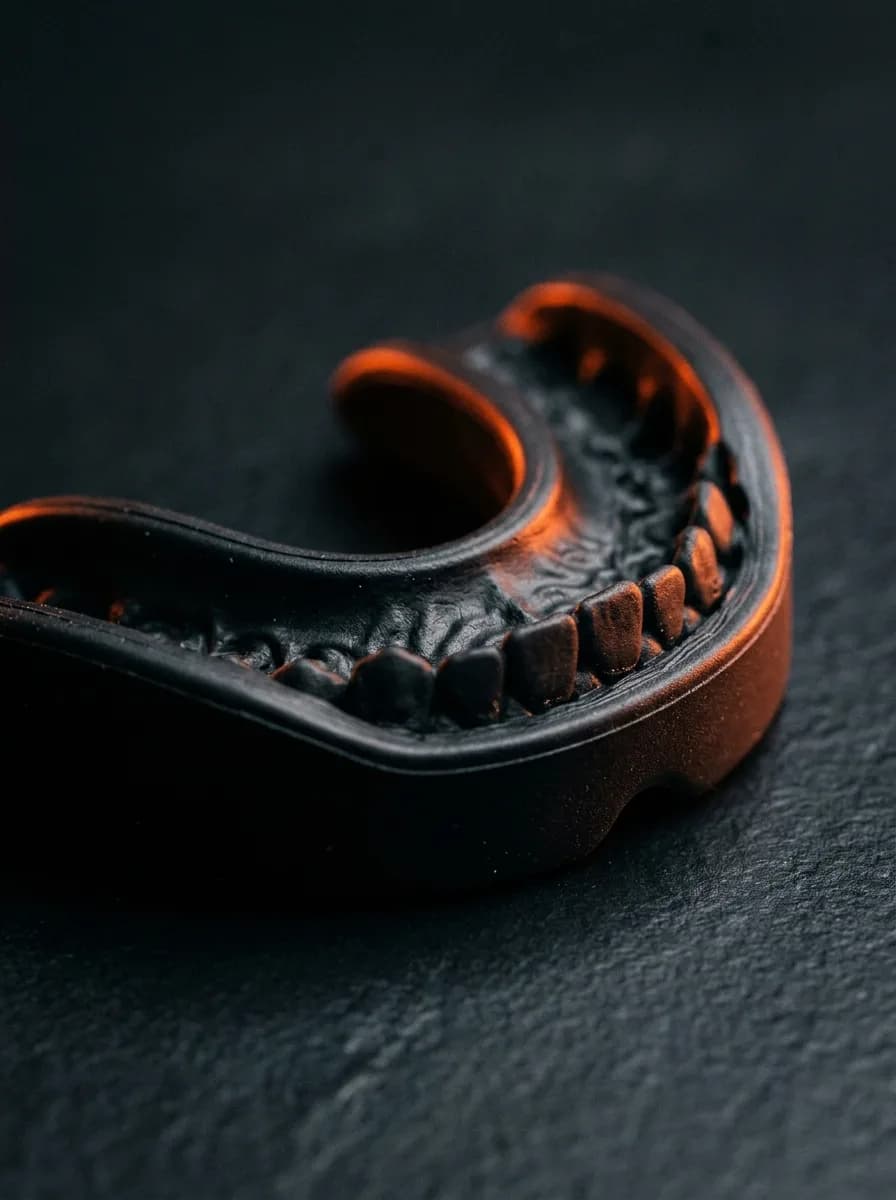
A lip guard is a separate coverage choice, not a different fitting method. It adds an outer flange that covers the lips and front teeth from a flatter angle, on top of the usual upper-teeth coverage. Some stock guards are built this way from the start — Vettex markets its DoubleGuard as a combination inner tooth guard and outer lip guard on one piece (Vettex, football mouthguard guide) — and the same idea can be designed into a custom guard. Strapped or strapless, with or without a lip flange, none of it changes whether the guard actually fits — and fit is what decides whether it stays in for a full game.
Youth sizing and growing teeth
GumGear doesn't publish a minimum age for a custom guard. What matters more for a younger player is where they are in losing baby teeth and growing adult ones. The ADA notes that children and teens may need to replace a mouthguard more often than adults simply because their mouths are still changing (ADA MouthHealthy), and the American College of Prosthodontists' 2023 position statement says custom guards for adolescents in mixed dentition should have erupting teeth relieved by 1–2 mm so the guard doesn't interfere with a tooth still coming in (ACP 2023 position statement). For a player who's still losing baby teeth, a quality boil-and-bite is a reasonable stopgap until the mouth settles down, and a custom guard is worth the jump once growth slows and refits become less frequent. Either way, check with a dentist before locking in a size for a growing athlete, and expect to refit sooner than an adult would — not on a fixed yearly schedule, but whenever the fit actually changes.
Whoever's paying also has to be on the order. GumGear's checkout requires a parent or legal guardian to confirm the purchase for anyone under 18, so a parent placing the order for a youth football player is the expected path, not a workaround.
Stock, boil-and-bite or custom
For occasional flag football or a first season of youth tackle, a quality stock or boil-and-bite guard is a reasonable, legal choice — it meets every rulebook above as long as it's worn and fits well enough to stay in. A boil-and-bite is hand-molded in about thirty seconds, and over a full season it tends to loosen — which is exactly when players start clenching to keep it seated or trimming it for comfort. Our full breakdown of boil-and-bite vs. custom mouthguards covers that trade-off in detail, and the four fit checks take about a minute to run on whatever guard a player already owns.
Football shares a lot with the other contact sports GumGear covers — sustained contact, a jaw that takes force from more than one direction in the same play. Our rugby mouthguard guide goes through the mechanics for another sport that loads the jaw in similar ways.
Playing with braces
Braces don't exempt a player from any rule above, and they change how a custom guard has to be made. GumGear's at-home impression kit can't produce a braces-compatible guard, because the impression putty won't release cleanly from around brackets and wires without distorting or tearing. A braces-compatible fit needs an in-person professional dental scan instead: ask an orthodontist for a digital scan of both arches, saved as an .stl file, and upload it yourself at checkout. Same guard, same $99 price, same 30-day fit guarantee as the impression-kit route — GumGear just can't accept any other file format, and dentists can't send scans to us directly, so the upload step is on the player or parent. Get in touch with us before ordering so we can confirm it suits the treatment stage, and ask the orthodontist what they recommend for the season too.
Mistakes that show up on game day
- Assuming strapless is fine in a league that requires a tether. Check the league handbook before the first game, not at equipment check.
- Buying a size "to grow into." An oversized stock guard fits worse, not better, and is more likely to get trimmed down until it stops covering anything useful.
- Skipping a mid-season fit check. A guard that fit at two-a-days can be loose by November, especially for a younger player.
- Letting an unstrapped guard become a sideline casualty. A guard that isn't tethered and isn't in a case between series is the one that's missing for the second half.
- Ordering a braces-compatible guard through the wrong process. An at-home impression kit will not produce one — see the section above before placing that order.
For the wider picture on materials, cost and when a custom guard is worth it for your situation, start with the complete custom mouthguard guide. And if a guard keeps turning up missing between series, our guide to why a mouthguard keeps falling out covers the fit problems behind it.