Rugby, hockey, and lacrosse all get filed under "contact sports," and the catalogue copy that follows usually treats them as one problem with three logos. They aren't. A scrum collapsing on your head, a deflected puck closing in at speed, and a hard rubber ball fired from thirty feet away all load your jaw differently enough that a mouthguard built around one of them can leave gaps against the other two. Here is what each sport actually does to your mouth, where the differences matter for the guard you pick, and what's genuinely common across all three once you get past the surface.
The short answer
Rugby, hockey, and lacrosse all sit on GumGear's Contact Guard tier at $99, and for all three the fit fundamentals are identical: full coverage to the last molar, retention that doesn't require clenching, and even thickness across the bite so an impact anywhere on the arch gets spread rather than concentrated. What changes sport to sport is where the force comes from and how often it arrives — rugby's hits are scheduled and unscheduled in roughly equal measure, hockey's come through equipment as much as from other players, and lacrosse pairs deliberate stick pressure with genuine projectile speed. None of that changes which guard you buy. It changes what you should actually expect the guard to do for you, which is the part most buying guides skip.
Why these three sports aren't interchangeable
It would be convenient if "contact sport" were a single category with a single risk profile, because then one generic product page could cover rugby, hockey, lacrosse, basketball, and BJJ with the sport name swapped out. It can't, because the actual mechanism of contact is different in each one. A rugby forward takes repeated, cumulative low-to-moderate force from bodies compressing around him in a scrum. A hockey winger takes rare but high-velocity, equipment-mediated force from a stick or puck, plus the separate problem of his own jaw slamming into his bite when he's checked into the boards. A lacrosse attackman takes targeted stick pressure from a defender's check plus the possibility of a 90-mph ball finding his face from a few yards out. Three different loading patterns, three different failure modes for a badly fitted guard. The sections below go through each one on its own terms.
Rugby: scrums, mauls, and open-play collisions
Rugby's contact comes in two distinct flavours, and a guard needs to handle both without you thinking about which one is coming. The first is structured and repetitive: scrums collapse, mauls get stacked, and the compressive load on a forward's jaw in a pack is sustained rather than a single sharp hit. That kind of force rewards a guard that stays seated under continuous pressure rather than one that only needs to survive a single impact. The second flavour is open play — a boot, a knee, or a stray elbow arriving near your jaw with essentially no warning, in a phase of the game where nobody is bracing for contact the way a forward braces for a scrum engagement. That unpredictability is exactly why retention without clenching matters so much here: you cannot clench in anticipation of a hit you did not see coming, so the guard has to already be doing its job before the impact lands.
What that means for the guard itself: even thickness across the full arch so a sustained scrum load doesn't find a thin spot over time, and a seal secure enough that it is still fully seated fifteen minutes into open play, not just in the tunnel before kickoff. A loose guard that a rugby player has to periodically reseat with his tongue is a guard that is unseated exactly when an unscheduled hit arrives.
Hockey: sticks, pucks, boards, and your own jaw
Hockey is the sport where people most consistently underestimate where the force actually comes from. The obvious risks are a stick catching you across the mouth or a deflected puck closing in faster than you can turn away — both are real, both are fast, and both can hit outside your field of vision. But the mechanism that catches players off guard is different: when you get checked into the boards, the impact doesn't have to touch your face at all to hurt your teeth. The sudden deceleration drives your own jaw into your own bite, and if your mouthguard doesn't have even material covering every tooth, that self-inflicted impact concentrates on whatever teeth happen to be thinly covered.
That third mechanism — your own jaw against your own guard, caused by a hit that never touched your mouth — is specific to sports with boards, glass, and high closing speeds. It's also the reason hockey punishes an uneven boil-and-bite fit more than almost any other sport on the Contact tier: a shell that is thick on one side and thin on the other from an uneven first press works fine against an external strike that you can at least partially see coming, but it offers no protection logic against your own jaw slamming shut unevenly on a board check. What a hockey player needs from a guard is uniform thickness and full molar coverage that holds up over a full shift, not just a guard that's rated for "high contact" in the abstract.
Lacrosse: stick checks and ball velocity
Lacrosse combines two separate hazards that most other contact sports only have one of. Stick checks are a deliberate, legal part of defensive play — a defender's stick lands on a ball carrier's hands, arms, and sometimes head with real force, repeatedly, over the course of a game. That's the sustained, semi-predictable side of lacrosse contact, closer in character to rugby's scrum pressure than to a single sharp blow. The second hazard is pure projectile speed: a hard shot off a stick can clear 90 mph from a few yards away, and at that range and velocity there is effectively no reaction time if the ball is headed for your face. That is a fundamentally different problem from a stick check — it's not about absorbing repeated moderate force, it's about a single high-energy impact landing with zero warning.
A guard built for lacrosse has to do both jobs without compromise: retain its seal through the grinding, repeated contact of stick checks over a full game, and still distribute a single high-velocity impact evenly enough that the force doesn't concentrate on one or two front teeth. That second requirement is where full-arch, even-thickness coverage stops being a nice-to-have and becomes the entire point — a guard that's thinned out anywhere across the bite is a guard with a known weak point waiting for a ball to find it.
What all three actually share
Despite the different mechanisms above, rugby, hockey, and lacrosse converge on the same underlying guard requirement: full-arch coverage with consistent, even material thickness and a seal that holds without conscious effort. None of the three sports gives you reliable warning before the hit that matters arrives — rugby's open-play contact, hockey's deflections and board checks, and lacrosse's high-speed shots are all, by definition, the moments you didn't see coming. A guard that depends on you clenching in anticipation fails all three sports in the same way, just for different in-game reasons. That's why GumGear treats rugby, hockey, and lacrosse as one product tier — Contact Guard — rather than three separate SKUs: the engineering requirement is identical even though the on-field story behind it isn't.
Where the sports do diverge is training volume and how often the guard gets worked. A rugby forward packing scrums several times a week puts sustained compressive load on a guard that a weekend lacrosse player simply doesn't generate. If you're training or competing at high volume in any of the three, check wear more often than the general replacement guidance — see how long does a mouthguard last for the specific signs that mean replace now rather than at the end of a season.
Playing more than one of these sports
A lot of athletes in this bracket aren't single-sport — hockey through the winter, lacrosse in the spring, rugby sevens in the fall is a genuinely common rotation at the high school and club level. Because Contact Guard is engineered to the shared requirement across all three sports rather than to any single one of them, you don't need a separate guard per season. The same guard that holds its seal through a scrum also holds it through a board check and a stick-check battle for a ground ball. Replacement timing still follows training load rather than the calendar, though — a guard carrying you through three overlapping seasons is doing more cumulative work than one that only sees a single sport, so check it against the wear signs in how long does a mouthguard last more often than a single-sport athlete would need to.
Where a boil-and-bite gives out first
A generic boil-and-bite shell can produce a passable fit for occasional, lower-contact use in any sport. It struggles specifically with the unpredictable-impact problem all three of these sports share, because a shell that is hand-pressed under time pressure tends to come out thicker in some spots and thinner in others — exactly the unevenness that turns a random hit into a concentrated one instead of a distributed one. It also loosens with repeated heat exposure and wear, which matters more in rugby and lacrosse than in lower-contact sports because both involve sustained pressure against the guard over the course of play, not just the occasional glancing blow.
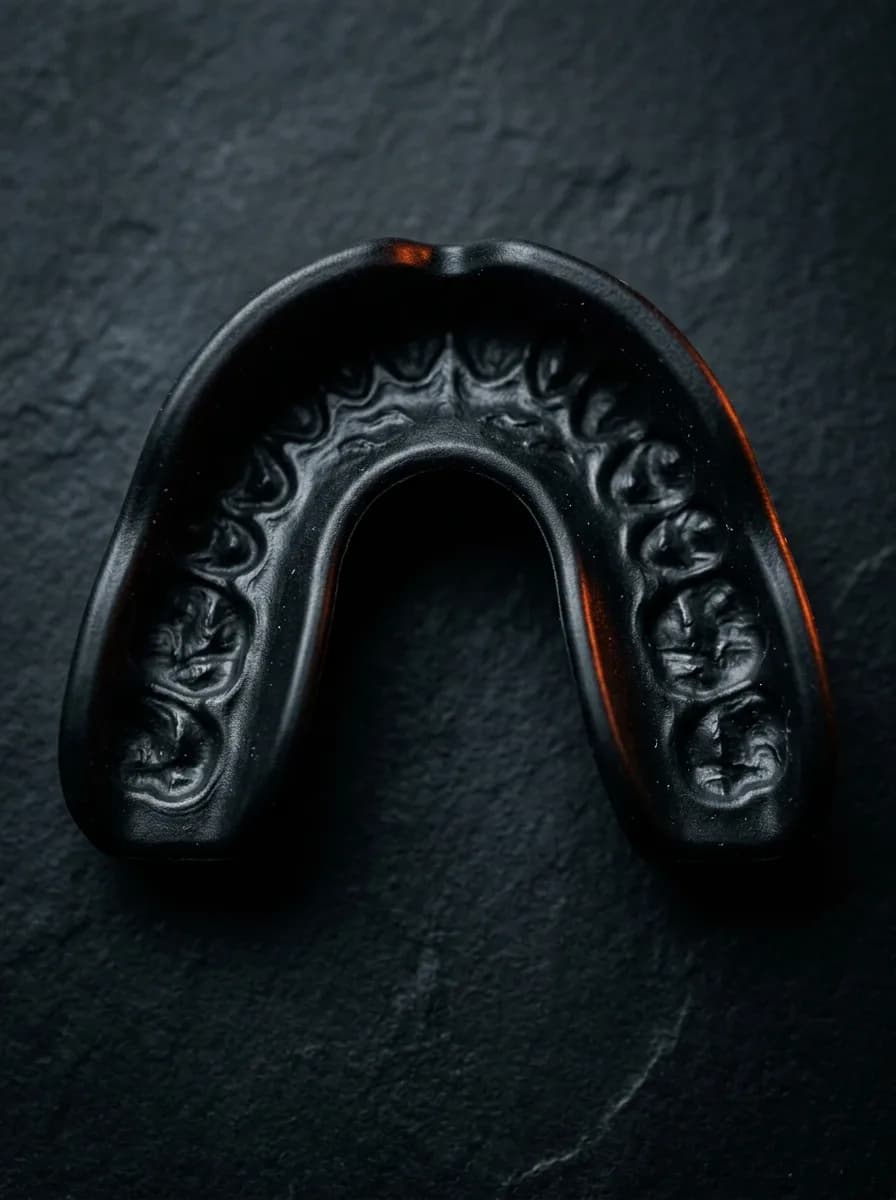
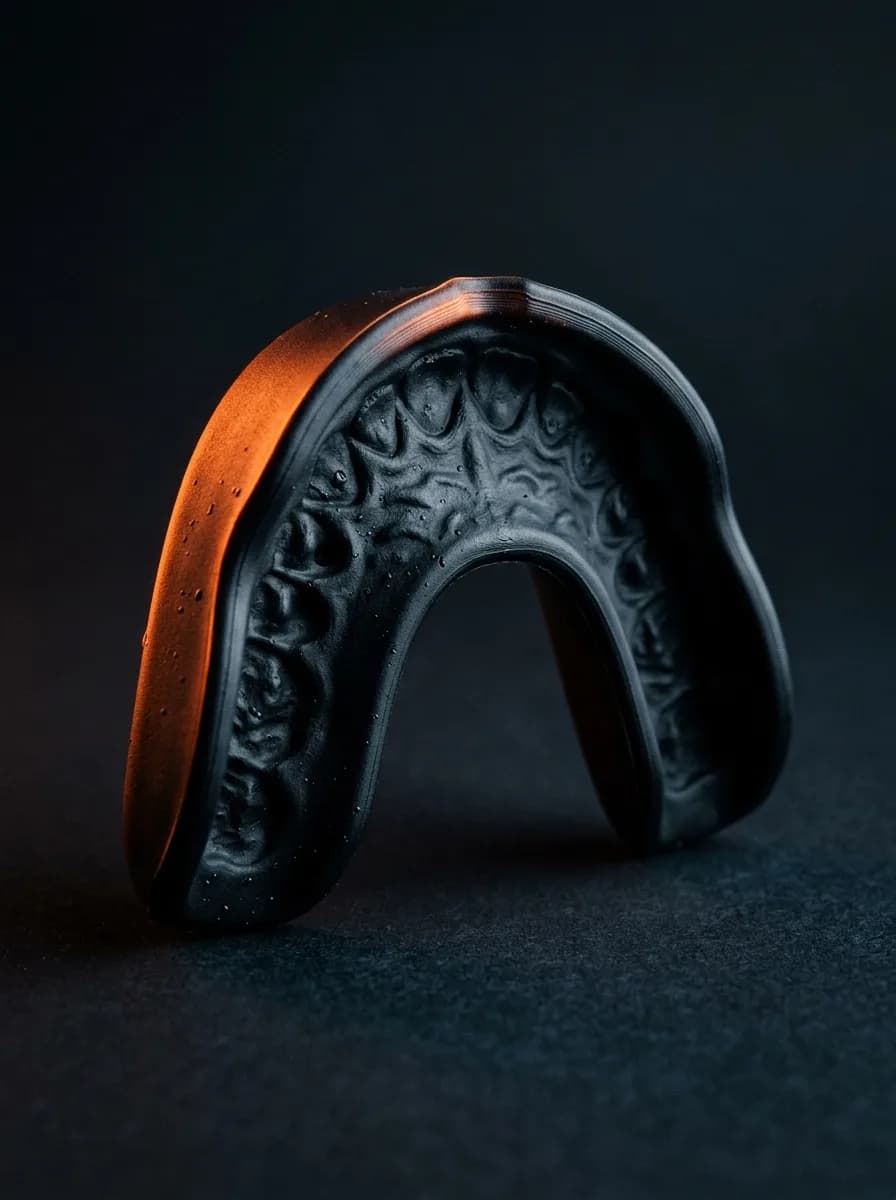
A cast-based custom guard — moulded from your own dental impression and pressure-laminated over a cast rather than pressed by hand against warm plastic — starts from the opposite direction: it's built to the exact shape of your arch before it ever touches your mouth, so the even-thickness, full-coverage requirement that all three sports need is a property of how the guard was made, not something you have to achieve by pressing harder or longer. For the full mechanical explanation of why that ordering matters — and the four fit checks any guard should pass regardless of sport — see how to fit a mouthguard.
Youth players and braces
Rugby, hockey, and lacrosse all skew younger than combat sports on average, and a meaningful share of youth players in all three are wearing braces. That matters here specifically: an at-home impression kit uses a putty that needs to release cleanly from whatever it's moulded around, and it cannot release cleanly from orthodontic brackets and wires without tearing or distorting. A boil-and-bite shell has the same problem from a different direction — it can't seat predictably over hardware it was never shaped to accommodate. If a player on your team is currently in braces, a braces-compatible fit needs an in-person professional dental scan rather than either home method. Get in touch with us first if that's your situation — we'd rather point you toward the right process than ship a guard that won't seat properly over brackets.
Choosing your guard
Rugby, hockey, and lacrosse all land on Contact Guard at $99 — moulded from your own dental impression, pressure-laminated over a cast, and built to the same even-thickness, full-arch standard regardless of which of the three sports you play. The 10–14 days turnaround runs from the day your impression kit ships back to us, through fabrication, to delivery. If you want the side-by-side on how Contact Guard compares to a $15 boil-and-bite or a $250+ dentist-made guard, start with boil-and-bite vs custom mouthguard. If you already know you want a custom fit, head to the Contact Guard page to see the full build and start your impression kit order.