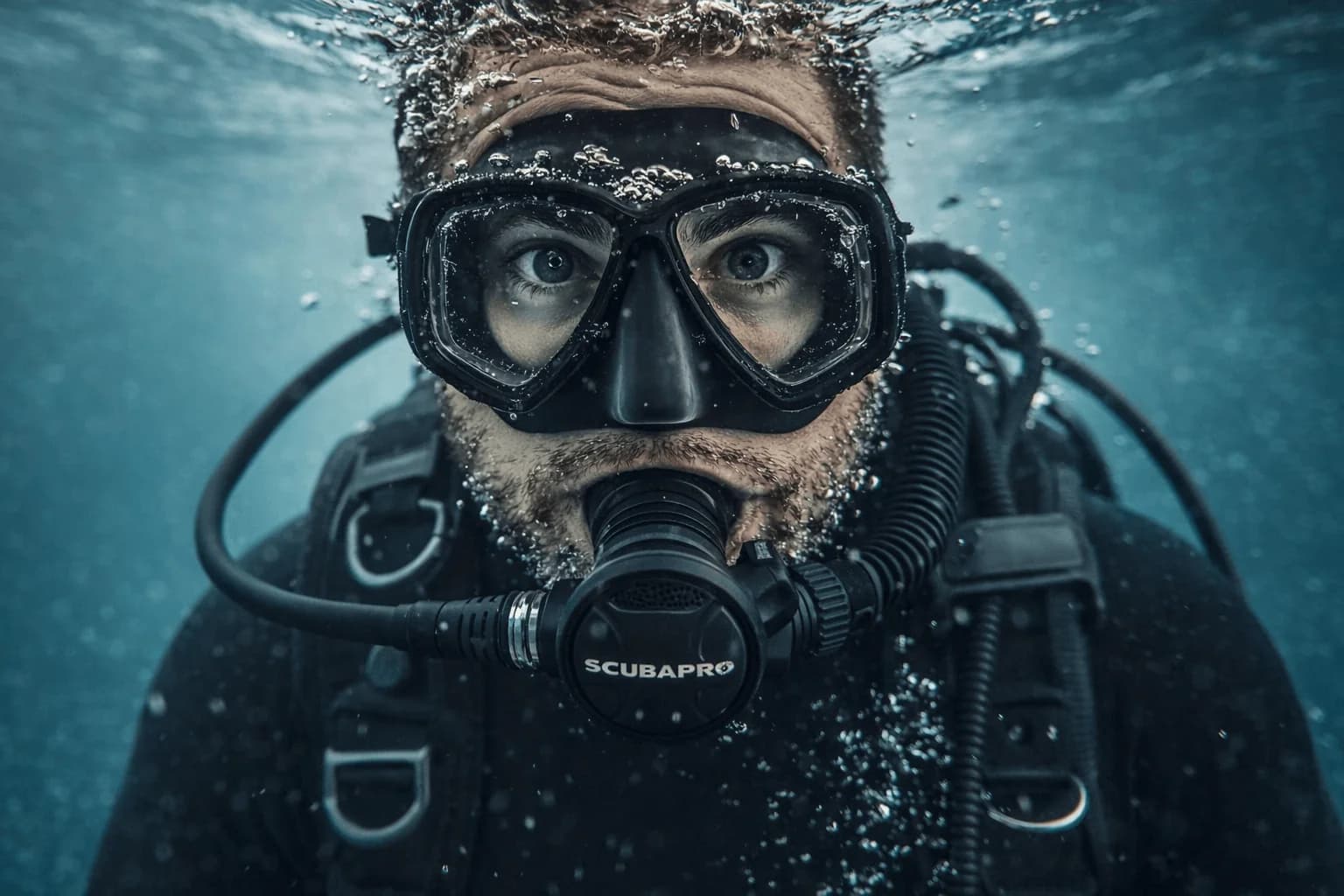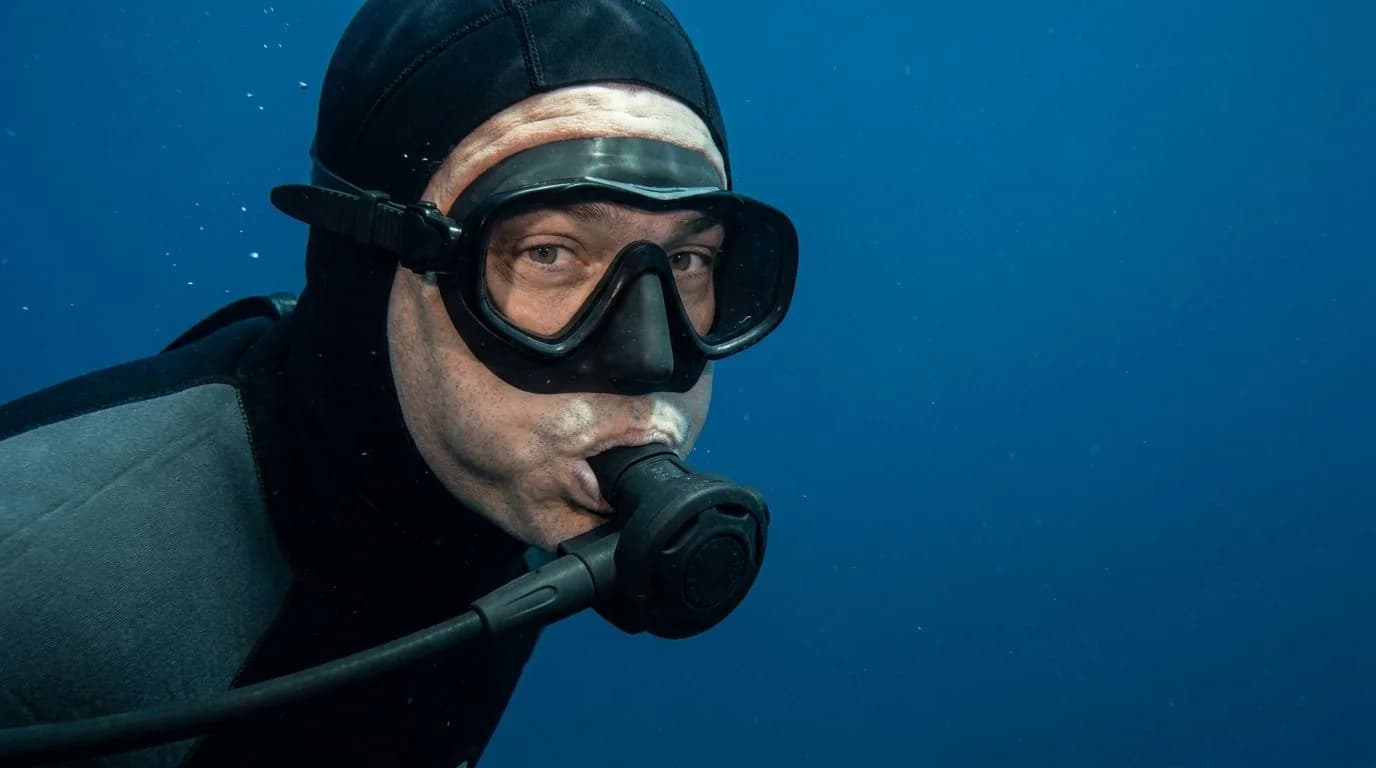
Jaw fatigue after a day of diving is common enough that a lot of divers quietly assume it is just part of the sport. It usually is not a sign that something is wrong with you — it is a straightforward mechanical consequence of biting down on a one-size mouthpiece for an entire dive, repeated across a multi-tank day or a week-long liveaboard. Snorkelers get a version of the same thing, usually from an even softer, cheaper one-size mouthpiece and hours spent face-down at the surface rather than thirty or sixty minutes at depth. This guide covers the mechanism behind both, where the line sits between ordinary muscle fatigue and something that needs a professional, and how a custom-moulded mouthpiece changes the retention problem at its source.
The short answer
A stock regulator mouthpiece — and most stock snorkel mouthpieces — has two soft tabs moulded to an average mouth. Average fits nobody exactly, so the only thing keeping the mouthpiece seated between your teeth is you biting down on it. That bite is not a quick clench you release a second later. It has to be held, continuously, for as long as the mouthpiece needs to stay in, which on a dive means the whole time you are breathing off the regulator. Sustained, low-level muscle contraction is exactly the kind of load that produces aching and fatigue, and it adds up the way any held muscular effort does — a few minutes is nothing, an hour is noticeable, a week of multiple dives a day is where divers start mentioning it unprompted. A custom-moulded mouthpiece addresses this at the structural level: the bite surface is shaped to the diver's own teeth, so the mouthpiece stays seated because it fits, not because the diver is clenching to hold it there. That is the entire mechanism this guide is about. It is not a guide to diagnosing jaw or dive-medical problems, and the next section covers exactly where that line sits before anything else.
When to see a dentist or doctor first
Before anything about mechanism or fixes: some patterns point away from ordinary fatigue entirely and deserve a direct answer rather than a workaround.
That list is about jaw and facial pain in general. Diving adds a second, separate category of warning signs that has nothing to do with mouthpiece fit, covered on its own further down, because it needs a different kind of professional and it is important enough not to blur together with ordinary muscle fatigue.
Why a stock mouthpiece causes jaw fatigue
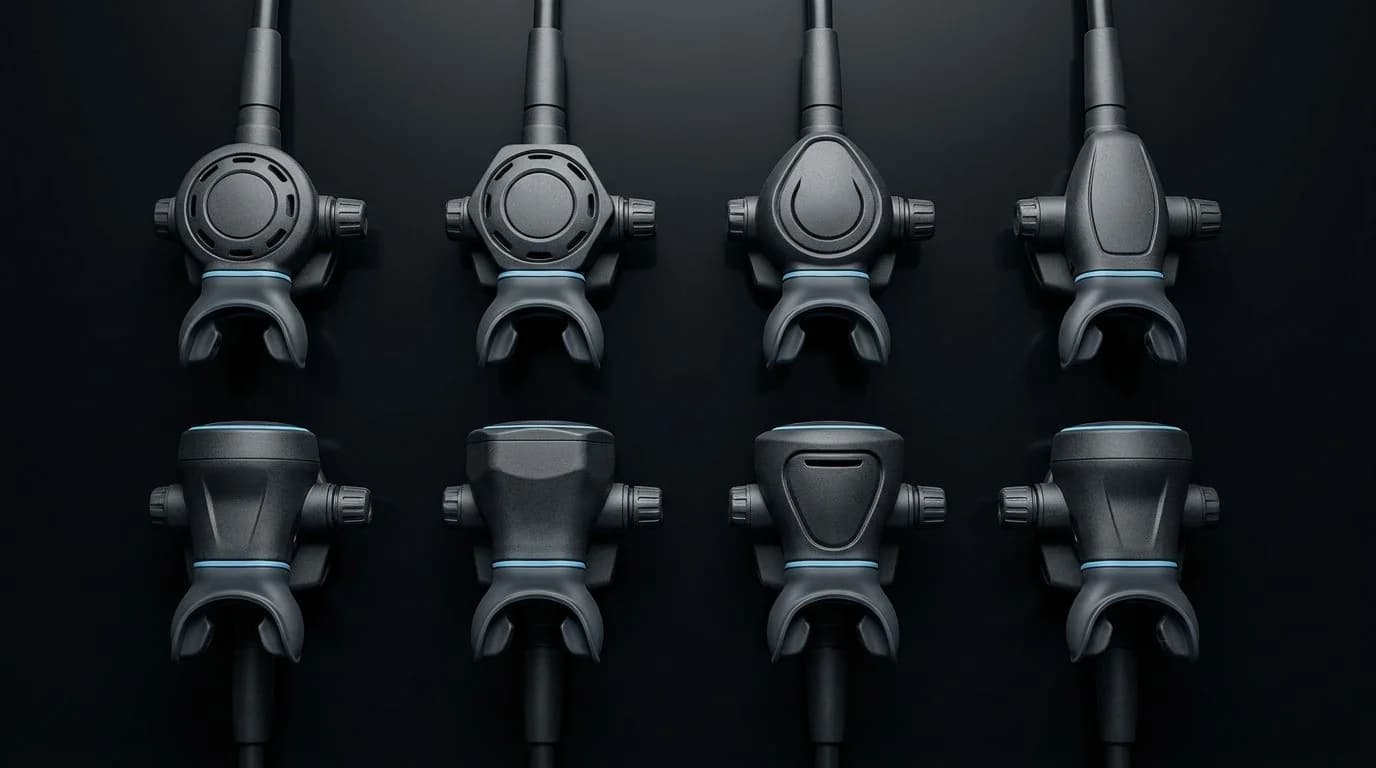
Every second-stage regulator ships with a mouthpiece sized to fit a wide range of mouths reasonably and none of them precisely. The two bite tabs are smooth, roughly symmetrical, and shaped with no reference to any specific diver's teeth. There is nothing for the tabs to lock into — no undercuts, no matching contour at the gumline — so retention has to come from somewhere else, and the only somewhere else available is the diver's own jaw muscles holding a clench.
That clench is a sustained isometric contraction: the muscle is working the whole time it is held, not just at the moment you first bite down. Isometric holds are known to fatigue muscle faster than the same effort spread across movement, because there is no release phase for blood flow to recover the tissue. A dive is, from the jaw's perspective, one long isometric hold with the regulator doing nothing to share the load. By the time a diver surfaces from even a single uneventful tank, the muscles around the jaw joint have been working continuously for the better part of an hour with no rest. That is enough on its own to produce the dull ache, tightness, or fatigue divers describe afterward — no separate injury required, and no joint problem required either. It is ordinary muscle physiology responding to an ordinary, if unnecessary, sustained load.
A second-stage regulator also has some weight and drag to it — the hose pulls slightly with every breath and with any current or movement in the water, and all of that pull transmits straight into the bite tabs you are clenching. A loose or marginal fit means the jaw has to clamp down harder to keep the reg from shifting, which increases the force of the hold on top of its duration. Divers who already run a slightly smaller or larger bite than the stock mouthpiece's midpoint tend to notice this first, because the generic shape gives them less to grip in the first place.
Why it gets worse across a dive day or a trip
A single relaxed shore dive on a quiet reef might not produce much more than mild tightness. The pattern changes once dives stack up. Two or three tanks in a day means two or three separate sustained clenches back to back, with a surface interval in between that is rarely long enough for jaw muscle to fully recover the way it would overnight. Each subsequent dive starts from a jaw that is already a little fatigued rather than a fresh one, so the same clench produces more discomfort sooner.
A liveaboard week takes that same compounding effect and runs it for days in a row. Four or five dives a day, every day, with the jaw muscles getting shorter and shorter recovery windows between sessions and almost none overnight if the fatigue has not fully resolved by morning. This is the setting where divers who have never thought about their mouthpiece suddenly start noticing it — not because anything changed about their technique or their gear, but because the cumulative hours of sustained clenching finally outpace what the jaw can quietly absorb. Instructors and divemasters who are in the water for a living describe exactly this: not a single bad dive, but a slow accumulation across a season that eventually presents as a jaw that aches by default, even on days off.
Jaw pain after snorkeling: same mechanism, different setting
Snorkelers get jaw fatigue through the identical mechanism, and in some ways the setting makes it worse rather than better. Snorkel mouthpieces are usually a softer, cheaper one-size part than a regulator's, because a snorkel is a much lower-cost item overall and the mouthpiece is rarely where the design budget goes. Soft material deforms more under a clench rather than holding its shape, so it tends to need an even firmer, more continuous bite to stay seated than a firmer regulator mouthpiece does.
Duration works against snorkelers too. A recreational dive is typically thirty to sixty minutes before a tank runs low and forces a surface. A snorkelling session has no equivalent limit — people comfortably spend two, three, or more hours face-down at the surface on a reef trip, especially on a guided boat excursion where getting back in the water costs nothing but time. That is a longer single isometric hold than most dives produce, on a softer mouthpiece that gives less mechanical support in return. The ache that shows up that evening, or the soreness around the jaw the next morning, traces back to the exact same sustained-clench mechanism described above — it is not a different condition because the fins are shorter and the air comes from the surface instead of a tank.
If anything feels off during or after a dive
What a custom-moulded mouthpiece changes
GumGear Scuba Guard is made from an impression of the diver's own teeth rather than a generic average shape. The at-home kit uses a dental-grade putty to capture the exact geometry of your bite — teeth, gumline, and the undercuts a generic mouthpiece has no way to reference — and the finished mouthpiece is fabricated in medical-grade silicone directly over a positive cast of that impression. No dentist visit is required at any point; the impression is taken at home and mailed back with a prepaid label.
The structural difference this makes is specifically about where retention comes from. A stock mouthpiece has nothing shaped to your teeth to grip, so it relies entirely on you clenching to hold it in place. A mouthpiece built from a cast of your own bite has real undercuts and a matching contour at the gumline for your teeth to seat into, so it stays in place because the shape holds it, not because a muscle is doing continuous work to keep it from shifting. That is the honest, specific claim, and it is worth stating at exactly this size and no larger: a mouthpiece built from your own bite reduces jaw fatigue on long dives, because retention comes from the fit rather than from a continuous clench. It is a change to one mechanical input, not a treatment for any underlying jaw or muscle condition, and it is not a claim that fatigue disappears entirely — just that the specific, sustained clench a stock mouthpiece demands is no longer part of the equation.
Scuba Guard is a drop-in replacement for second-stage regulators from Apeks, ScubaPro, Mares, Aqualung, Atomic Aquatics, Oceanic, Sherwood, and Hollis, made from medical-grade silicone that is BPA-free and latex-free. The at-home impression kit, lab fabrication, and return shipping run on a 10–14 days domestic turnaround, which is worth planning around rather than ordering the week before a trip.
What a mouthpiece can't do
To be precise about the boundary of that claim: a custom-fit mouthpiece changes one mechanical input — how the mouthpiece is retained — and that is all it changes. It does not diagnose, treat, or cure any jaw joint or muscle condition, and it is not a substitute for a dentist if the pain pattern matches the warning signs above. It also has nothing to do with pressure, equalisation, or any other dive-medical issue, and nothing in this guide should be read as advice about whether a particular ache means you are fit to continue diving. If your jaw pain turns out to be caused by something other than the sustained clench a stock mouthpiece demands, a better-fitting mouthpiece will not resolve it — which is exactly why the routing earlier in this guide matters more than the product does.
What to do next
If your symptoms match either warning list above — the general jaw-and-face list or the dive-specific one — stop here and talk to a dentist, doctor, or dive physician before doing anything about your mouthpiece. If what you are dealing with is the ordinary ache of clenching through tanks or a long snorkel session, a custom-moulded mouthpiece addresses the mechanical cause directly: it is built at gumgear.com/scuba from an at-home impression, no dentist visit required, for $199. For the full picture of what else changes once you move off a stock mouthpiece — seal, communication, replacement schedule — see the complete custom scuba regulator mouthpiece guide, and if you are weighing GumGear against other custom options, the SeaCure vs GumGear vs stock comparison lays out price, process, and fit side by side.