If you have searched for a SeaCure alternative, you already know the stock mouthpiece on your regulator is not it — it is the thing you are trying to replace. The real decision is between two custom routes, SeaCure and GumGear Scuba Guard, that solve the same bite-clench problem in genuinely different ways. We can speak with total confidence about our own product. We cannot speak with the same confidence about a competitor's, and we are not going to pretend otherwise. Here is an honest, dimension-by-dimension comparison — price, whether a dentist visit is involved, turnaround, fitting method, and comfort — with every unverified claim labelled as such.
The short answer
A custom scuba regulator mouthpiece replaces the generic rubber tab that ships on every second stage with something shaped to your own bite. Two products do this commercially: SeaCure, a long-standing name in dive shops and catalogs, and GumGear Scuba Guard, made from your own at-home dental impression at $199 with no dentist visit required. The stock mouthpiece that came with your regulator is the third option — free, immediate, and the thing both custom products exist to improve on. Which custom option is right for you comes down to how you want the fitting handled: in your hands in a few minutes, or mailed off and lab-fabricated from an exact cast. We can only verify the specifics of our own process. SeaCure's pricing, exact fitting steps, and materials are not something we have independently confirmed, and every claim about it below is marked that way.
Three ways to solve the same problem
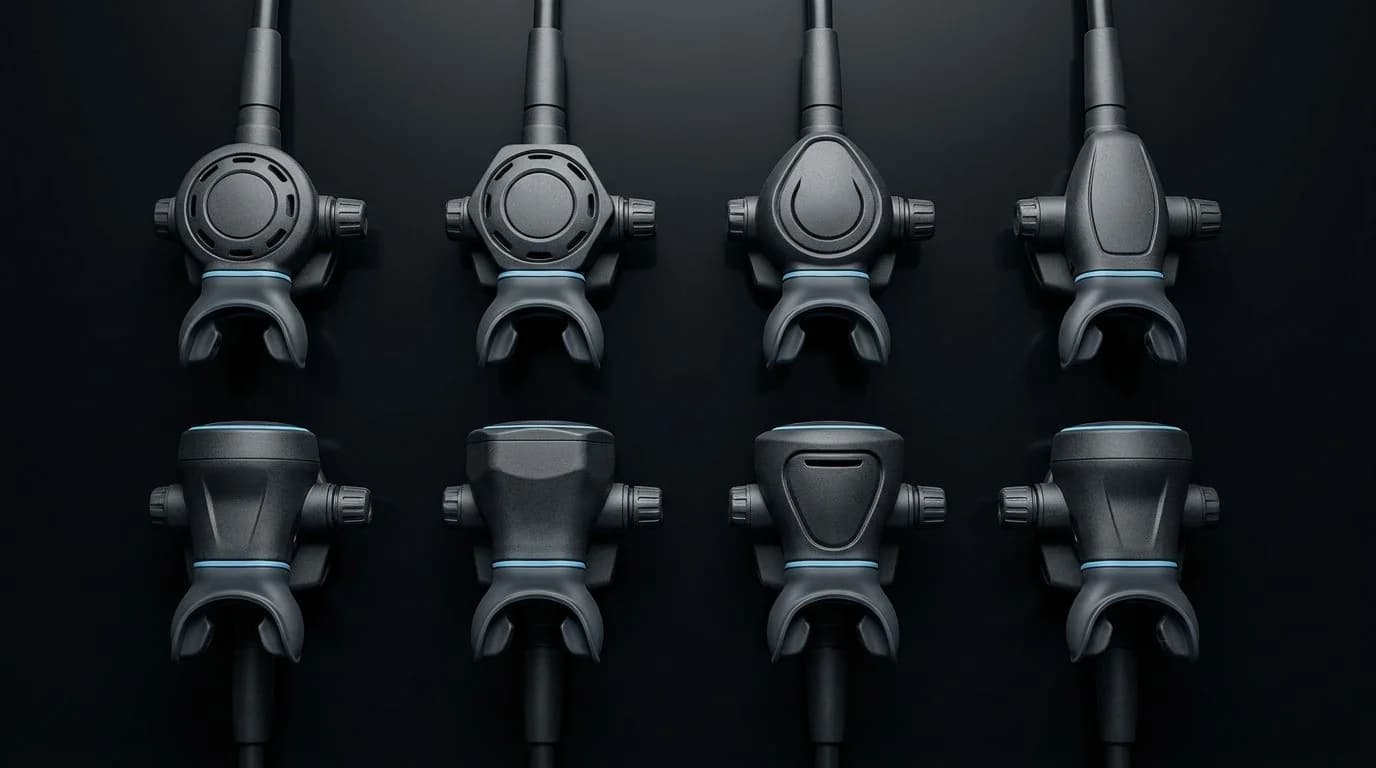
All three options exist on a spectrum from zero customization to full customization:
- Stock mouthpiece. The one-size rubber or silicone-blend tab that comes pre-installed on every regulator second stage. It works for everyone in the loosest sense and well for almost no one specifically — it stays in place only because you clench down on the bite tabs for the entire dive.
- SeaCure. A self-moulded custom mouthpiece sold through dive shops and online retailers. As publicly described by sellers, it uses a mouldable compound that you bite into and hold while it sets to the shape of your teeth — no mail-in impression kit and, per that same public description, no dentist chair involved. We have not tested a unit ourselves, so we are describing the category as it is marketed rather than vouching for it firsthand.
- GumGear Scuba Guard. A custom mouthpiece moulded from a dental impression you take at home, mailed back to us, and fabricated in medical-grade silicone over a positive cast of your exact bite. $199, no dentist visit, drop-in compatible with Apeks, ScubaPro, Mares, Aqualung, Atomic Aquatics, Oceanic, Sherwood, and Hollis second stages.
Price
GumGear Scuba Guard is $199, a fixed price with no tiers or add-ons. The Rush option you may see referenced elsewhere on the site is currently disabled while we finalize a service-level agreement with our lab, so there is no expedited pricing to quote either — standard turnaround is the only option right now. The stock mouthpiece has no separate price; it is included with the regulator.
SeaCure's current price is something we are not going to quote. We looked for a figure we could stand behind and could not find one we trust enough to publish — retail pricing for dive gear accessories shifts by retailer and over time, and guessing a number here would be exactly the kind of unverified claim this comparison is trying to avoid. If price is the deciding factor for you, check current listings directly before comparing against the $199 figure above.
Does it need a dentist visit?
GumGear requires no dentist visit at any point. The impression kit ships to your door, you take the impression yourself in a few minutes following the included instructions, and you mail it back with the prepaid label. The entire process happens at home.
SeaCure is publicly marketed as a self-fit product as well — the mouldable compound is designed to be shaped by biting into it directly, which would mean no dentist visit for that product either. We are flagging this as a claim we have seen in how the product is sold rather than something we verified ourselves, since we have not gone through SeaCure's fitting process directly. If a dentist visit matters to your decision, confirm the current fitting instructions with the retailer before buying.
The stock mouthpiece obviously requires nothing — it arrives already installed.
Turnaround
GumGear's order-to-delivery window is 10–14 days domestically, or 14–21 days for international orders. That breaks down into the kit reaching you, the few minutes it takes to take the impression, mail-back transit, a 2–3 business day lab stage where the mouthpiece is fabricated over your cast, and return shipping. It is a mail-order process end to end, which is the trade-off for a lab-fabricated fit rather than a self-fit one.
SeaCure's self-fit model, as described publicly, does not appear to involve a mail-in step at all — if the compound cures in your mouth in a few minutes, the implication is same-day fitting with no lab wait. We have not confirmed this is how it works in practice for every SeaCure purchase path (some retailers may handle it differently), so treat this as the general shape of the product category rather than a confirmed timeline. The stock mouthpiece has no turnaround at all — it is already on the regulator the moment you buy it.
Fitting method, compared
This is where the two custom products genuinely diverge, and it is worth understanding the mechanical difference rather than just the headline of "both are custom."
GumGear's process captures your bite first and builds the mouthpiece second. The at-home kit uses a dental-grade putty that records the exact geometry of your teeth, gumline, and bite relationship. That impression becomes a positive cast, and the mouthpiece is pressure-moulded in medical-grade silicone directly over that cast, the same cast-and-mould approach a dental lab uses for a sports guard. The shape of your mouth exists in the lab before the finished mouthpiece does.
SeaCure's process, as it is publicly described, runs the other direction: a mouldable compound is placed in your mouth and shaped by your own bite in real time, curing to that shape over a few minutes. That is a meaningfully different approach — fitting happens in one sitting, in your hands, rather than being fabricated from a pre-captured cast. We have not independently verified the exact compound, cure time, or number of attempts typically needed, so we are describing the mechanism at the level that is genuinely well-established about this category of product rather than citing a spec sheet.
The stock mouthpiece involves no fitting process whatsoever. It is a single generic shape, sized to an average mouth, held in place entirely by the diver biting down on it.
Comfort and retention
The stock mouthpiece requires continuous muscular effort to stay seated — you clench the bite tabs for the entire dive, and that clench is the direct cause of the jaw ache, headaches, and lip soreness divers associate with long or repeated dives. It is not a defect so much as the unavoidable consequence of a one-size part trying to serve every mouth shape.
GumGear Scuba Guard is built from a cast of your actual bite, including the undercuts your teeth create near the gumline. That geometry is what lets the mouthpiece hold itself in place without a sustained clench, which is why divers who switch report finishing multi-tank days without the jaw fatigue they had assumed was just part of diving. We are careful here not to overclaim: this reduces jaw fatigue on long dives, which is established product experience, not a clinical claim about treating any joint or muscle condition. If you have a dental or TMJ issue, see a dentist rather than relying on any mouthpiece — custom or stock — to address it.
SeaCure's comfort and retention characteristics follow from the same basic principle any custom-fit product relies on — capturing your bite instead of approximating it should reduce the need to clench, in theory. Whether that holds up in practice for SeaCure specifically is not something we can speak to firsthand, since we have not worn or tested one ourselves. Diver forums and reviews exist on this if you want a user-reported view; we are not going to summarize secondhand reports as if they were our own findings.
Side-by-side comparison
The table below pulls every dimension together. Where we could not verify a SeaCure figure or specification, we say so directly in the cell rather than leaving a confident-looking blank.
| Feature | SeaCure | GumGear Scuba Guard | Stock mouthpiece |
|---|---|---|---|
| Price | Not something we can verify — check current retailer listings | $199 | Included with the regulator |
| Dentist visit | Marketed as self-fit, no dentist — not independently confirmed by us | No — at-home impression, mailed in | No — ships pre-installed |
| Turnaround | Appears to be same-sitting, per public descriptions — unconfirmed | 10–14 days domestic, 14–21 days international | Immediate — already installed |
| Fitting method | Mouldable compound shaped by biting, cures in place (publicly described, not tested by us) | Dental putty impression, lab-moulded over a cast of your exact bite | One-size tab, held by biting down |
| Material | Proprietary compound — not confirmed by us | Medical-grade silicone, BPA-free, latex-free | Generic rubber or silicone blend |
| Comfort / retention | Should reduce clenching by design — not independently tested by us | Fits without clenching; reduces jaw fatigue on long dives | Requires continuous clench; fatigue builds over multi-tank days |
Who should pick which option
If you dive two or three tanks a year on a single holiday and the stock mouthpiece has never bothered you, there is no pressing reason to change anything. Neither custom option pays for itself at that frequency.
If you dive multi-tank days routinely, travel for diving multiple times a year, instruct or divemaster for a living, or already know you clench, a custom mouthpiece is worth the money — the only real question is which fitting process you would rather go through. Choose a self-fit route like SeaCure if you want the mouthpiece the same day and are comfortable with a chairside or at-home moulding process you complete yourself in minutes — just verify the current price, material, and exact fitting steps with the retailer first, since we could not confirm those details here. Choose GumGear Scuba Guard if you would rather mail in an impression and get back a mouthpiece fabricated from an exact cast in a lab, and you are fine waiting 10–14 days for that precision. Neither process is objectively better — they trade speed for a different kind of fabrication, and the right one depends on how you would rather spend those few minutes or those two weeks.
The honest bottom line
The stock mouthpiece on your regulator is not a competitor to either custom option — it is the baseline both products exist to improve on, and it is the right call only if you dive rarely enough that comfort has never been an issue. Between SeaCure and GumGear, this comparison can only take you so far: we can tell you exactly what GumGear costs, how it is made, and how long it takes, because that is our own process. We cannot tell you SeaCure's current price or verify its exact fitting steps and materials, and we are not going to publish numbers we cannot stand behind just to make a table look more complete. If a mail-in, lab-fabricated fit from your own dental impression sounds right for you, that is what GumGear Scuba Guard is. For the full picture of what changes underwater once you switch away from a stock mouthpiece — jaw fatigue, seal, communication — see our complete custom scuba regulator mouthpiece guide, and for exactly how the at-home impression step works, see how to take a dental impression at home.