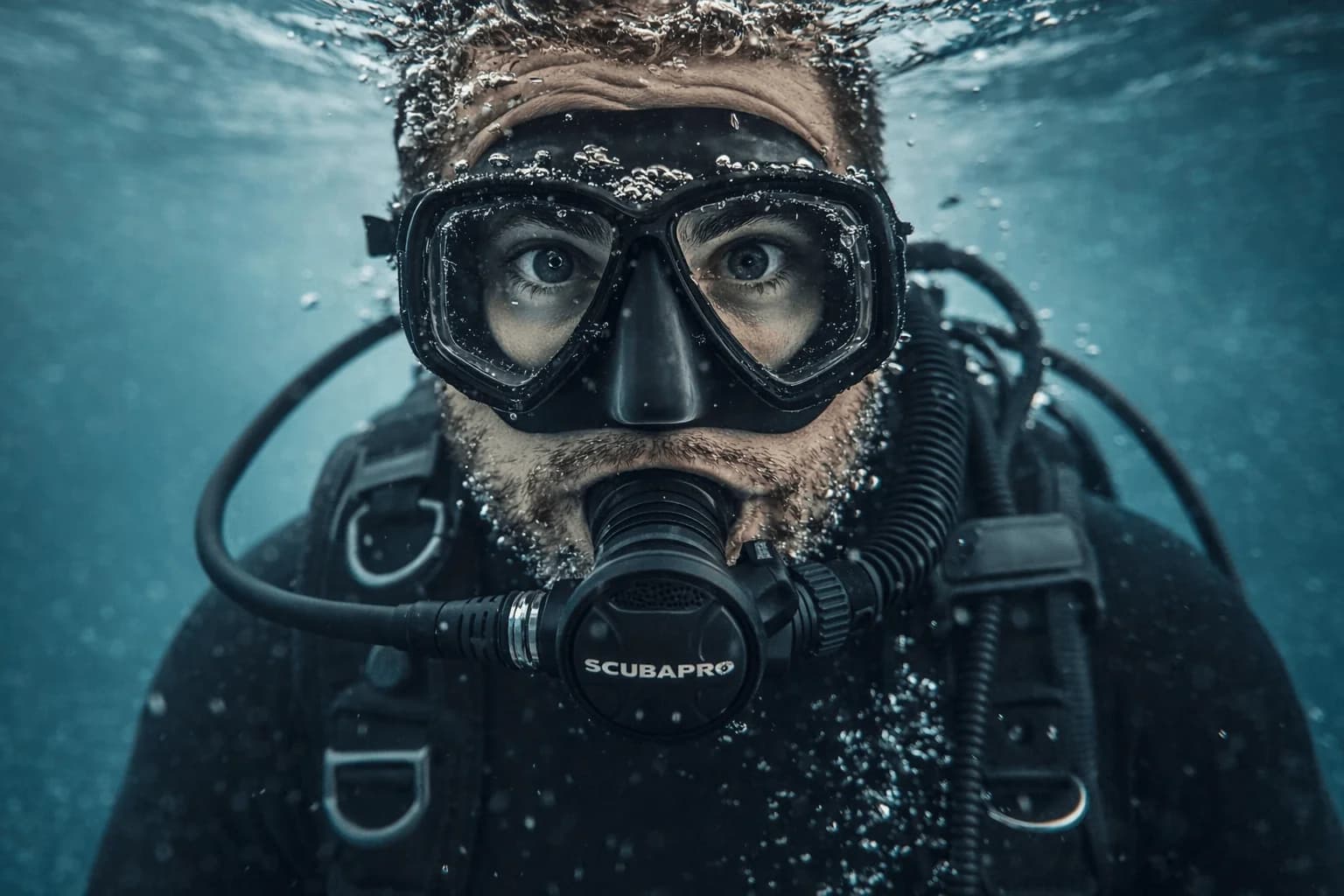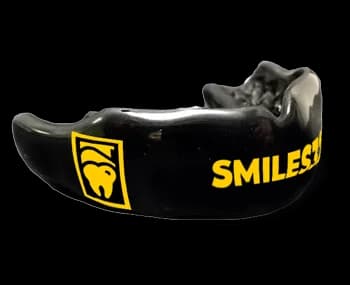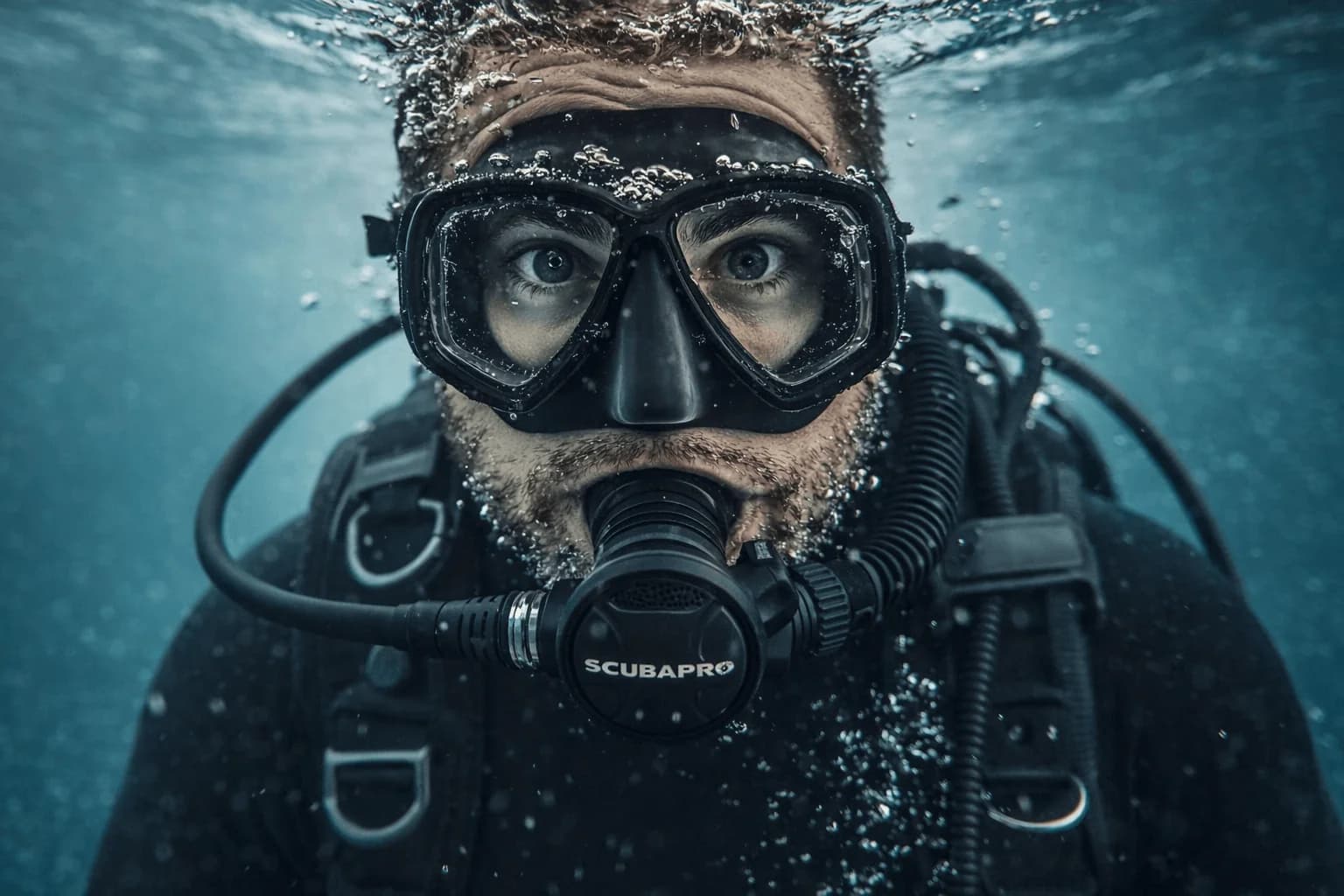
The stock rubber mouthpiece that ships with your regulator is the same generic part packed into every regulator on the assembly line. It works, but it costs you jaw fatigue, lip soreness, and the bite-clench that ends long dives early. A custom-moulded mouthpiece reduces all three. Here is what changes, regulator compatibility, and when it is worth the upgrade.
The short answer
A custom-moulded mouthpiece is made from your own dental impression and replaces the generic part on your existing regulator. It removes the need for the constant bite-clench that stock mouthpieces demand, reduces jaw fatigue on long dives, and reduces the lip and gum soreness that develops over multi-tank days. Fitting is a drop-in swap. Compatible with most second- stage regulators from Apeks, ScubaPro, Mares, Aqualung, Atomic Aquatics, Oceanic, Sherwood, and Hollis.
What a regulator mouthpiece actually does
The mouthpiece is the part of your second stage that sits in your mouth, and it has more jobs than it looks like. It holds the second stage in position, with the weight of the housing and the pull of the hose acting on it all dive. It forms a seal so water does not leak in around your lips. And it has to do both while leaving you free to breathe, swallow, equalise your ears and signal.
A generic mouthpiece manages all this with two bite tabs that sit between your teeth and a flange that rests against the outside of your gums. Nothing about that shape is specific to you, so the tabs are held in place by muscle: your jaw closes on them and stays closed. That sustained, low-level effort is the root of nearly every complaint in the next section.
Why stock mouthpieces fail you
Generic regulator mouthpieces are mass-produced rubber parts sized to fit the average mouth. Several problems compound on a real dive:
- Bite-clench requirement. Stock mouthpieces stay in place because you clench your teeth on the bite tabs. That clench is sustained for the entire dive. The TMJ load builds steadily and shows up as jaw ache by the second tank.
- Lip and gum pressure points. The shield rests unevenly against your lips and gums. Soreness develops on longer dives and across multi-day trips.
- Air leakage during exertion. When you breathe hard during a current or a swim against drag, a poorly fitted mouthpiece leaks at the seal.
- Loss-of-mouthpiece risk. An off-fit mouthpiece comes loose more easily during a regulator handoff or a buddy-breathing drill.
What changes underwater
A custom mouthpiece is shaped to your teeth, so it can sit in your mouth with less effort from your jaw. Clenching to hold a generic mouthpiece is a common source of regulator-related jaw tiredness, and removing the need to clench can change a dive:
- More comfortable long dives. Less clenching can mean less jaw tiredness over a long dive.
- Possibly calmer breathing. Some divers report that a relaxed jaw goes with more relaxed breathing. We do not have data on whether it changes how fast you use your gas, so treat that as an individual experience, not a promise.
- Better seal during exertion. The impression- based fit follows the contour of your lips and gums; the seal holds during heavier breathing.
- Better communication. Custom-fit mouthpieces interfere less with speech and bubble-blowing signals.
Signs the mouthpiece is the problem
Not every ache underwater comes from the mouthpiece, but a pattern like this usually does:
- Your jaw or the muscles in front of your ears ache after the second tank of a day, and the ache builds across a trip.
- You catch yourself clenching, and your teeth or gums feel sore afterwards.
- Your lips or the corners of your mouth are sore where the flange sits.
- The bite tabs are chewed, flattened or starting to perforate.
- The regulator feels loose or leaks at the seal when you breathe hard.
Cheaper things to try first
A custom mouthpiece is not the only lever, and some fixes cost nothing. Ask an instructor to look at how your hose is routed and where the second stage sits, since a regulator that drags your jaw sideways or downward makes you clench harder. Practise deliberately relaxing your jaw at the start of each dive and breathing slowly through the regulator. Take breaks between tanks rather than leaving the mouthpiece in at the surface. And ask your dive shop whether your regulator manufacturer offers a different stock mouthpiece shape.
If you have done these and the ache still builds across a trip, the shape of the mouthpiece itself is the remaining variable, and that is the problem a custom mouthpiece addresses. We lay out your options, including other custom routes, in the custom regulator mouthpiece comparison.
Regulator compatibility
Scuba Guard is a drop-in replacement for most second-stage regulators with standard mouthpiece tabs, including those from:
- Apeks
- ScubaPro
- Mares
- Aqualung
- Atomic Aquatics
- Oceanic
- Sherwood
- Hollis
If your regulator is not listed, send a photo of the second stage to contact@gumgear.com and we will confirm fit before you order. Industrial mouthpieces (commercial dive helmets, rebreather DSV/BOV bite blocks) are out of scope and we will tell you so. Brand is only part of the question: the thing that matters is the mouthpiece fitting on your specific second stage, which is why a photo is worth sending if you have any doubt.
Materials: silicone vs EVA
Sport guards use medical-grade EVA. Scuba Guard uses medical-grade silicone — same family of material as the stock mouthpiece on your regulator, just moulded to your bite instead of a generic shape. Silicone holds up to saltwater, UV, and sustained submerged use in a way EVA does not. The trade-off: no multi-layer impact protection (you do not need it underwater), but excellent flexibility, comfort under sustained contact, and chemical resistance. The silicone is BPA-free and latex-free. The Scuba Guard is moulded over a cast of your impression in the same way a sport guard is built over its cast, so the retention comes from the shape of your own teeth.
Snorkels, rebreathers and other gear
Scuba Guard is built for open-circuit regulator second stages. It is not a general snorkel-mouthpiece replacement, and rebreather bite blocks and commercial dive-helmet mouthpieces are out of scope. The clench mechanism is the same on a snorkel, and our jaw-fatigue guide covers that case, but if snorkelling is most of your time in the water the right move is to raise a custom option with your dive shop for the gear you actually use.
The fitting process for divers
Identical to the sport-guard impression process:
- Order at gumgear.com/scuba.
- Receive the home impression kit in 1–3 days.
- Take the impression in 5–10 minutes — step-by-step guide.
- Ship it back with the prepaid label.
- We fabricate the custom silicone mouthpiece in 2–3 business days.
- Total order-to-delivery: 10–14 days domestically. International orders take longer, varying by destination.
The mouthpiece swaps onto your second stage in place of the stock one. Your local dive shop can fit it during a regulator service if you prefer. Because the whole process is by post, order it well before a trip rather than the week you fly, and give yourself time to try it in the water before you rely on it somewhere remote.
Braces and other dental situations
The at-home kit cannot make a mouthpiece for braces. The impression putty cannot release cleanly over brackets and wires without tearing, and a braces-compatible fit needs an in-person professional scan. If you wear braces, contact us before ordering.
Crooked teeth and gaps are fine, since the impression records your teeth as they are. If you have had dental work, or your bite is changing for any reason, tell us when you order, because the mouthpiece fits the bite you had on the day of the impression. And if you have loose teeth, sore gums, or an unresolved tooth problem, see a dentist before you take an impression.
Your first dives with it
A custom mouthpiece feels different from a stock one, and that is expected. It seats against your teeth where a stock part just sits between them, so give it a few dives to feel normal. Try it first in shallow, controlled water, such as a pool or a calm shallow site, before you trust it on a deep or remote dive.
Use that session to practise the skills a mouthpiece touches: taking the regulator out and recovering it, and passing an alternate air source or handing off a regulator in a buddy drill, ideally with an instructor or experienced buddy. You want to know the new mouthpiece behaves the way you expect in those situations before it matters. If you notice a pressure point or the fit feels wrong after a few dives, contact us inside the 30-day window and we will remake it.
One more thing to expect: clenching is a habit. If you have dived for years on a stock mouthpiece, you may find yourself biting down out of reflex even though the new one no longer needs it. Notice it, relax your jaw, and let the fit do the holding. For many divers the habit fades as the new mouthpiece becomes the normal one.
What a mouthpiece does not change
A custom mouthpiece changes one mechanical thing: how the part in your mouth is held. It does not change how you equalise, how your body handles depth and pressure, or whether you are medically fit to dive, and nothing here should be read as saying otherwise. A mouthpiece also does not diagnose or treat a jaw or muscle condition.
If your ears, sinuses or head hurt, if you feel dizzy, or if anything feels wrong during or after a dive, that is a conversation for a dive physician, not a mouthpiece decision. Jaw pain that is persistent, severe, or comes with clicking, locking, swelling or numbness is a matter for a dentist or doctor. Our jaw-fatigue guide sets out the routing in full.
When the upgrade is worth it
- Multi-tank days are routine. The jaw fatigue compounds across dives; a custom mouthpiece is the single biggest comfort upgrade per dollar.
- Dive travel multiple times per year. Five-tank days on a liveaboard make the clench problem unmistakable.
- Prior jaw issues or TMJ history. Reducing the bite-clench may help, but check with your dentist first. A mouthpiece is not a treatment.
- Dive instructors / divemasters. You are in the water all day, every day. The math is obvious.
| Diver | What the stock mouthpiece does to you | Custom mouthpiece |
|---|---|---|
| A few tanks a year on holiday | Little. Short exposure rarely builds fatigue | Can wait unless the stock one bothers you |
| Regular weekend diver | Occasional jaw ache after longer dives | Worth considering if the ache recurs |
| Dive-travel multi-tank days | Fatigue builds across the trip | Likely to be a noticeable comfort gain |
| Instructor or divemaster | Many hours in the water, day after day | Strong case, since you wear it more than anyone |
If you dive a few tanks a year on holiday and the stock mouthpiece does not bother you, you can wait. For anyone diving more frequently or longer, the comfort gain tends to show up on the first multi-tank trip.
Go deeper: the two companion guides
If you are choosing between options. Custom mouthpieces come in more than one flavour: some you mould yourself in a single sitting, others are made in a lab from a cast. Our comparison goes through price, whether a dentist visit is involved, turnaround and fitting method side by side, and marks every claim we cannot verify about someone else's product.
If your jaw already hurts. The jaw-fatigue guide explains the sustained-clench mechanism in detail, why it compounds over a dive day or a trip, and which symptoms point to a dentist or dive physician rather than a mouthpiece.
Replacement and care
Custom silicone mouthpieces last 18–36 months in regular saltwater service. Failure mode is usually material fatigue from saltwater exposure, not impact. Rinse with fresh water after every dive day. Replace if the silicone goes chalky, if the bite tabs perforate, or if the fit feels different. Rinse it in fresh water after each dive, let it dry, and keep it out of heat and direct sun, for example not in a hot car. Look it over before every dive. Full lifespan chart in how long does a mouthguard last.
Ready to ditch the bite-clench? Order Scuba Guard ($199). 30-day fit guarantee. If it does not fit on arrival, we remake it.